Basics
A computer network is a group of computers and others modern devices linked to each other that enables they to communicate with each others and share their resources, data, and applications.
A computer network can be categorised by their size. Common network types:
• PAN (Personal Area Network) • LAN (Local Area Network) • MAN (Metropolitan Area Network) • WAN (Wide Area Network) • WLAN (Wireless LAN network) • VPN (Virtual Private Network)
A Personal Area Network handles data transmission within devices such as tablets, personal digital assistants, smartphones, and computers.
Note that single users in most cases basically use this type of network.
People make use of these types of networks commonly in situations where they need to connect wearable or mobile devices.
A Local Area Network or LAN as it’s commonly known is a network that connects devices usually in the same building or local area. This could be computers or other devices that are within an office building, which are connected together to share resources.
Most people make use of this network type to share files and other business-related documents in an organisation. A router is often used when multiple Local Area Networks need to be connected to each other. A LAN is probably the most commonly used computer network nowadays.
When it comes to the MAN network type, know that it is usually a large computer network on a large geographical area that includes several buildings and LANs, or even the entire city or metropolitan area.
The geographical area of the MAN is larger than LAN, but smaller than WAN, which makes it fall in between a Local Area Network and a Wide Area Network.
Wide Area Networks or WAN are networks that span over wide geographical locations, which could be multiple buildings or even multiple cities or countries.
This kind of network is suitable for providing Internet access to Local Area Networks or some other kinds of networks. Wide area network communications often require networking devices such as routers and modems for effective data communication.
Moreover, WANs are usually provided by ISPs which are interconnected to offer communication to wider areas. A WAN link is usually referring to a network interface that provides connection of the smaller network towards the bigger WAN network.
Unlike Local Area Network, a Wireless LAN network doesn’t make use of a cable for end-to-end connectivity. A WLAN makes use of a Wireless Access Point (WAP) device, which serves as the point of connectivity for wireless clients on the network.
Keep in mind that this kind of network can support other devices such as smartphones and tablets. One of the advantages of using a WLAN network is the flexibility it offers users, since there is are cable restrictions.
A Virtual Private Network is a type of network that makes use of existing private or public network infrastructure (e.g the Internet) to provide a secured network connection.
Have in mind that a VPN is also used to connect LAN networks that are far away between them. For example, a company has different buildings (with LAN networks) in different Cities and wants to interconnect the buildings over the Internet. A VPN will provide an ideal and cheap solution for such a case.
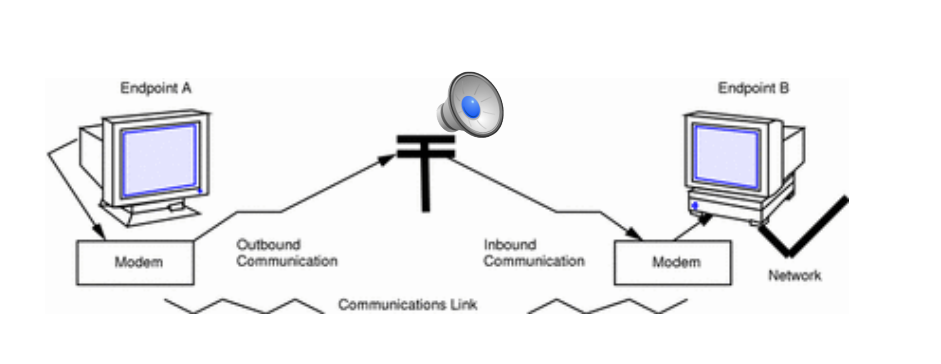
A generic point-to-point communications configuration consists of two endpoints connected by a communications link. In a generic configuration, an endpoint system could be a computer or terminal, either in an isolated location or physically connected to a network
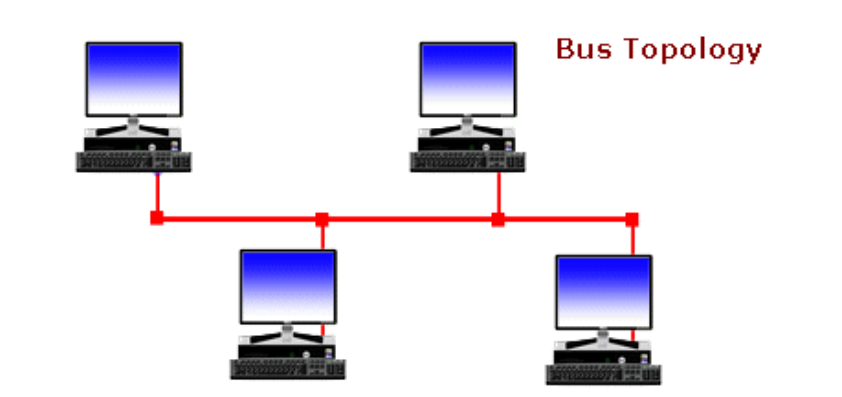
Bus networks use a common backbone to connect all devices. A single cable, the backbone functions as a shared communication medium that devices attach or tap into with an interface connector. A device wanting to communicate with another device on the network sends a broadcast message onto the wire that all other devices see, but only the intended recipient actually accepts and processes the message
A star network is often combined with a bus topology. The central hub is then connected to the backbone of the bus. This combination is called a tree.
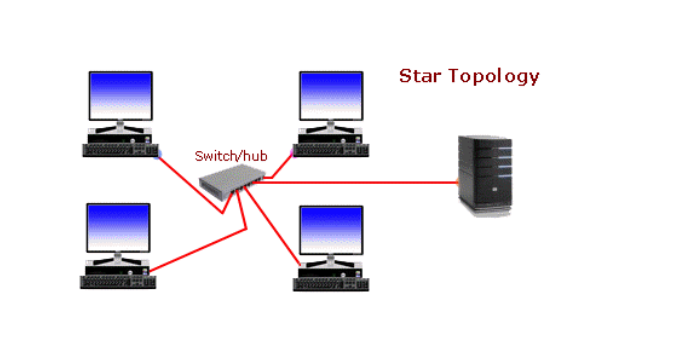
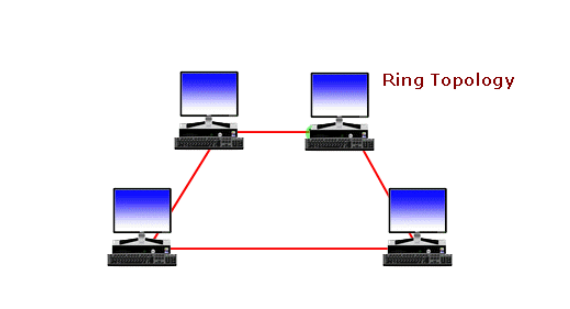
A ring network is a local area network (LAN) in which the nodes (workstations or other devices) are connected in a closed loop configuration. Adjacent pairs of nodes are directly connected. Other pairs of nodes are indirectly connected, the data passing through one or more intermediate nodes
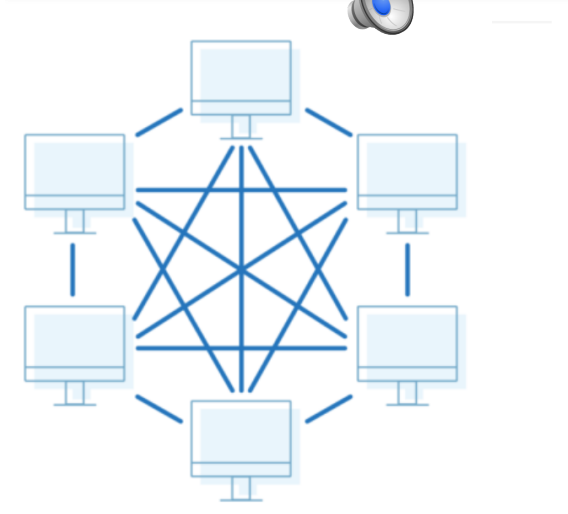
A mesh network is reliable and offers redundancy. If one node can no longer operate, all the rest can still communicate with each other, directly or through one or more intermediate nodes.
The chief drawback of the mesh topology is expense, because of the large number of cables and connections required. In some scenarios, a ring network or star network may prove more cost effective than a mesh network. If all the nodes lie near a common line, the bus network topology is often the best alternative in terms of cost.
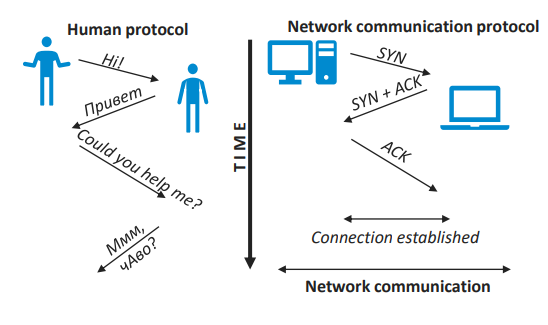
A protocol is a set of rules that governs the communications between computers on a network. In order for two computers to talk to each other, they must be speaking the same language.
Designated ISO/IEC 7498-1 in the mid-1970s, the OSI model is a standard of the International Organization for Standardization (ISO) The Open Systems Interconnection model (OSI model) is a conceptual model that characterizes and standardizes the communication functions between two endpoints in a network.
The main concept of OSI is that the process of communication can be divided the communication procedure into smaller and simpler components.
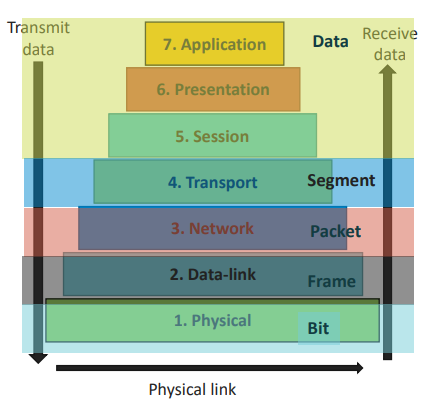
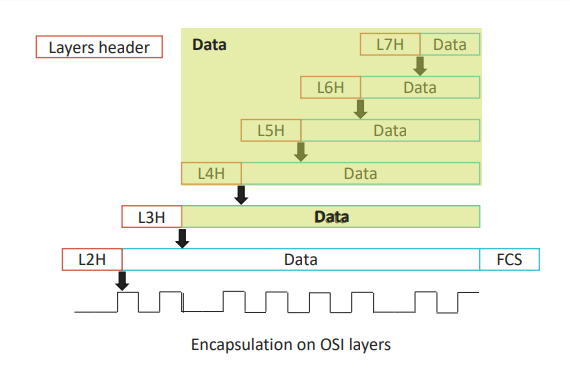
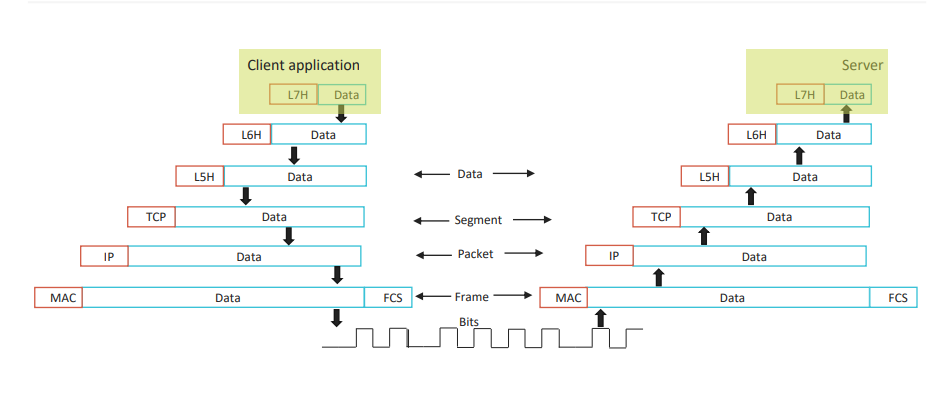
Data Encapsulation in computer networking is adding a bit of additional information to the data packet and preparing the information for being delivered in the network. The data is encapsulated by adding specific information to the main data at each OSI layer. Each layer adds its own information to data and passes the result to the next layer.
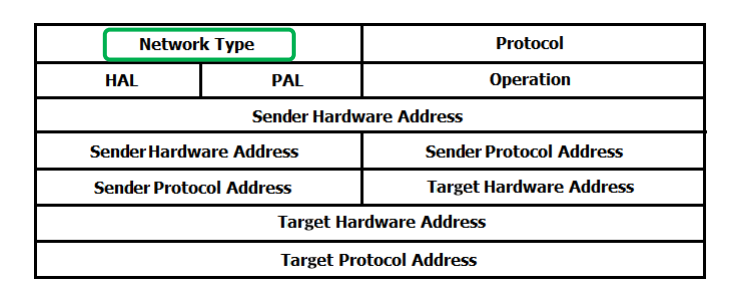
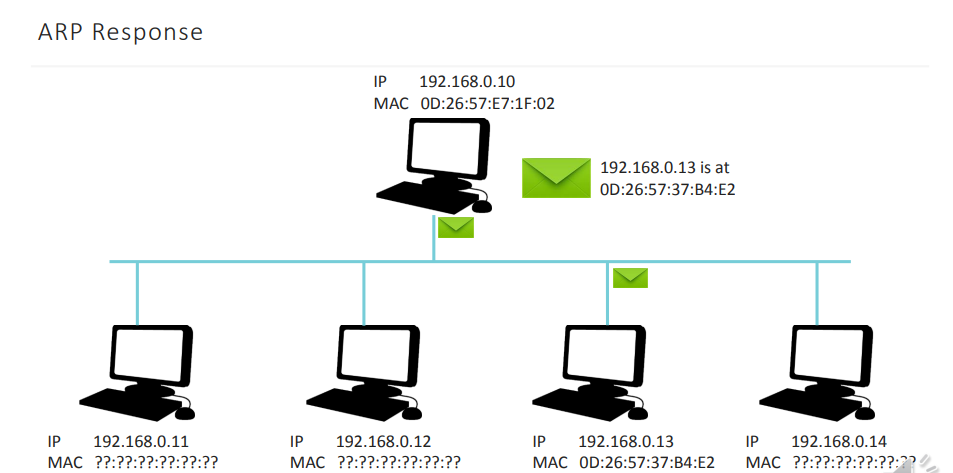
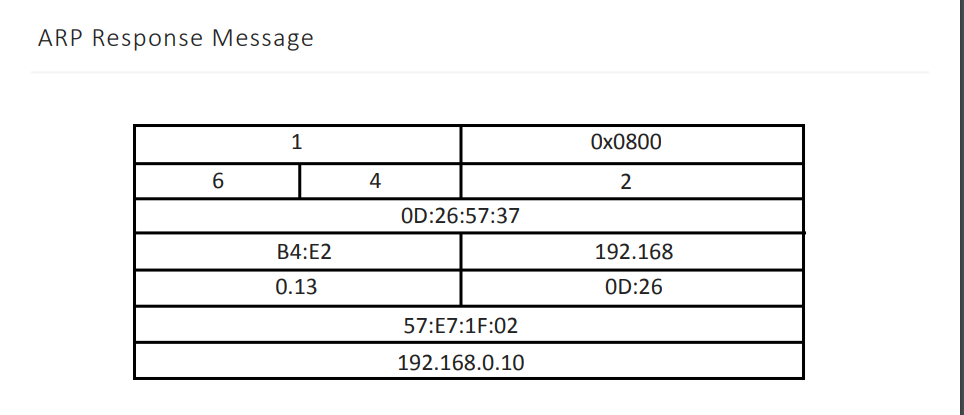
An Ethernet Address Resolution Protocol (ARP) was described in RFC 826. It is a communication protocol used for discovering the link layer address associated with a given internet layer address. Today these addresses are MAC and IPv4, but ARP can work with a lot of combinations of network and data link layer technologies.
It is useful to:
• detect IP conflicts • update other machines' ARP tables • troubleshoot connection issues
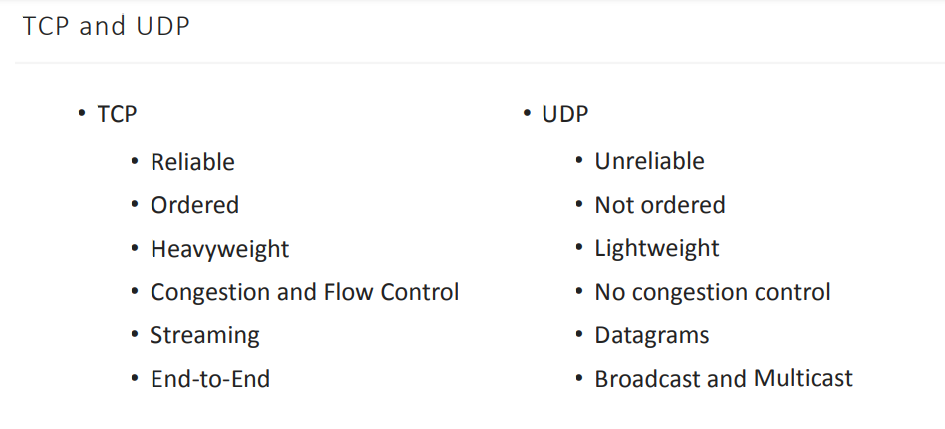
• UDP uses a simple connectionless communication model with a minimum of protocol mechanisms. • It provides checksums for data integrity, and port numbers for addressing different functions at the source and destination of the datagram. • UDP has no handshaking dialogues, and thus exposes the user's program to any unreliability of the underlying network; there is no guarantee of delivery, ordering, or duplicate protection.