Conversation


| tags: [openzfs, time machine, nvme, ssd] | ||
| --- | ||
|
|
||
| Hello world, today I'm writing yet another how-to guide. This time, on how to backup macOS using NVMe SSDs instead of external (portable) SSDs. The goal is to allow anyone to backup their Mac without worrying about failure modes like broken or missing external disks — maybe it got stolen, or you forgot where you left it. Using multiple NVMe SSDs with OpenZFS is a reliable way to solve this problem. |

There was a problem hiding this comment.
maybe it got stolen, or you forgot where you left it
This doesn't really track from the previous half of the sentence. Unclear if you're talking about the external backup or the source device
There was a problem hiding this comment.
Using multiple NVMe SSDs with OpenZFS is a reliable way to solve this problem.
I think the "problem" isn't called out explicitly enough for this. For instance, OpenZFS can't help you if the entire disk is missing.
| ## A brief history of external drives | ||
|
|
||
| External drives can refer to either hard disk drive (HDD) or solid state drive (SSD). They are often used as secondary storage devices. Sometimes you use it to store films, videos, photos or simply use it as a Time Machine to backup important documents in case your computer fails. |
There was a problem hiding this comment.
This isn't really necessary, doesn't add much to the post
|  | ||
| Figure 1. *Xlpierrelx, CC BY-SA 3.0 <https://creativecommons.org/licenses/by-sa/3.0>, via Wikimedia Commons* | ||
|
|
||
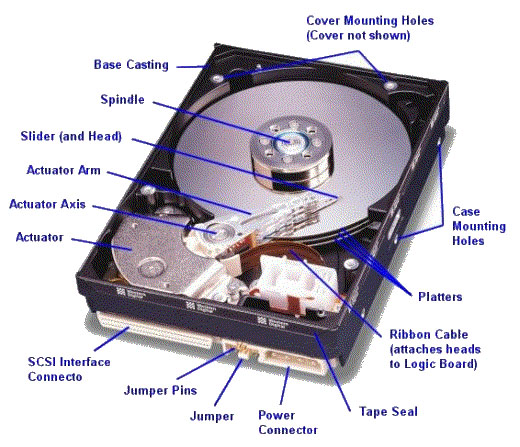
| A popular external portable HDD back in 2010 was Western Digital's My Passport. Nowadays, most people opt for SSDs as their external storage device. This is because HDD is prone to many failure modes. It is vulnerable to being damaged by a head crash where the head scrapes across the platter surface. The head may touch the platter due to sudden power failure, physical shock (when you drop the disk), or simply wear and tear. The HDD's spindle system relies on air density inside the disk enclosure to support the heads at their proper flying height while the disk rotates. So if the air density is too low, the head may get too close to the disk and risk data loss from head crash. |
There was a problem hiding this comment.
A popular external portable HDD back in 2010 was Western Digital's My Passport.
This can be removed
| Figure 2. NVMe Family of Specifications [reproduced from NVM Express, Inc., | ||
| "NVMe over PCIe Transport Specification," Revision 1.3, July 2025, Figure 1] | ||
|
|
||
| Finally, we talk about the form factor. There is M.2 SATA and M.2 PCIe SSD, and both. SATA M.2 drives will have two notches while PCIe SSD has one. There are also SSDs that allow for both interfaces. |
There was a problem hiding this comment.
SATA has one notch too, but on the other side
The dual notch ones are drives that can speak both protocols, so they can slot into both interfaces
2 participants


Seeking review on this draft. There's a lot to improve on but I've been stalling on this post for days.
Could potentially add more info on openzfs, zfs and apfs in follow up post.