Python library and robotics building instructions for robotics education within schools. The aim of this project is to provide ease of teaching and programming with MicroPython, and reduce the cost of teaching robotics. Teaching physical robotics is engaging and rewarding. Students gain experience in coding, engineering and electronics, compared to making cheap existing kits that do not combine any of these.
We have written a robotics library that allow connection with each chassis. The library must be placed in the same directory as the code running on the Pico. This can be done using Thonny IDE
Once the library is installed on the device.
There are two variants of the library, a circuitPython and a microPython. The circuitPython can work with both the Pico and PiMaker rp2040. The microPython one is designed for the Raspberry Pi Pico.
This Github contains the instructions and demo code for each chassis. Parts lists can be found under each robot, as well as links to places the parts can be purchased. The item names are there, so it is up to you where you purchase thee parts from.
The robots all make use of the Raspberry Pi Pico, which allows programming through Python! Python is a simple language to learn for those starting to learn code.
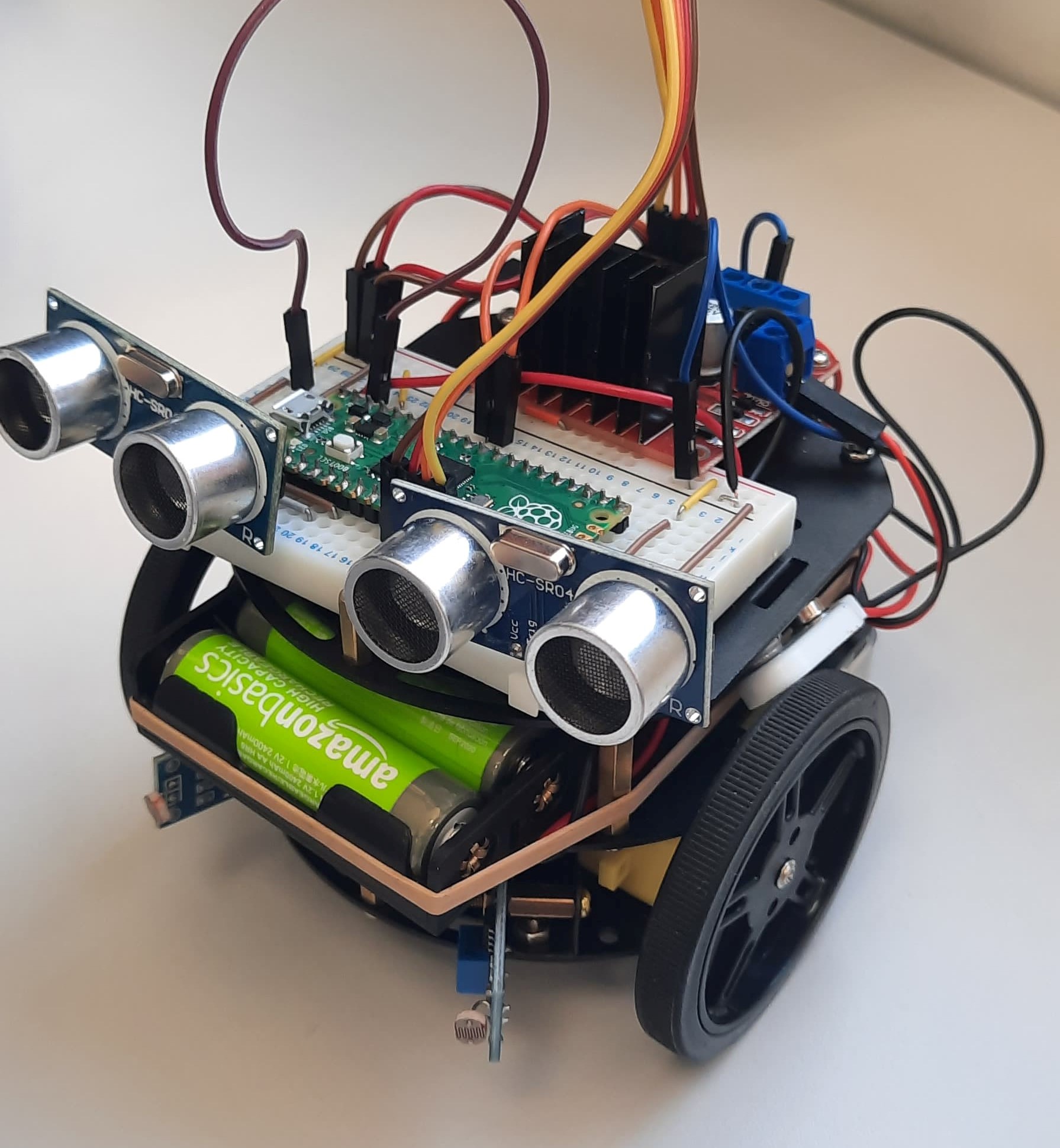
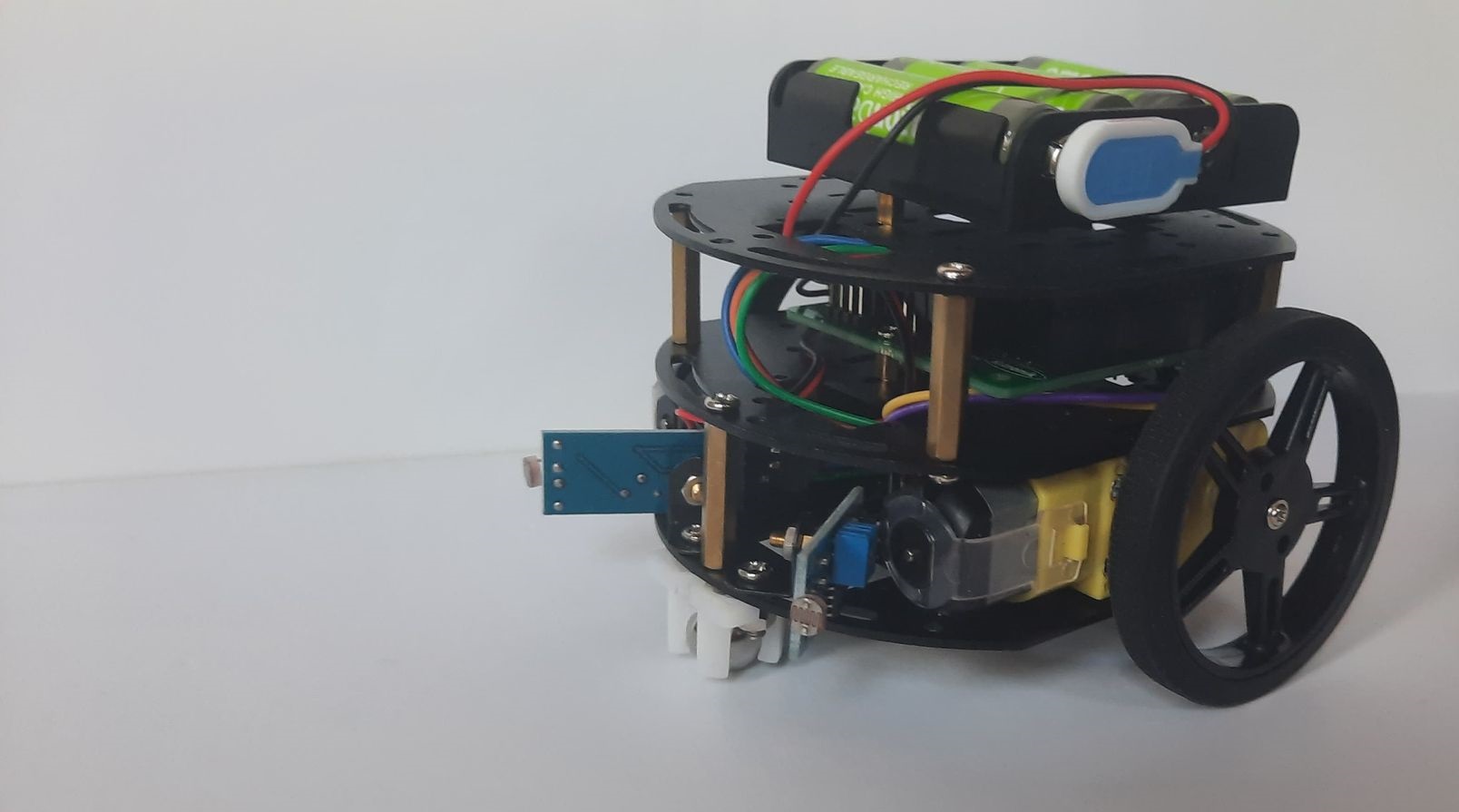
Wheelbot uses two DC motors and a ball caster at the front. This robot uses a simple design, but can exhibit some intelligent behaviour. Whether you want to use ultrasound sensors to make robot vacum-cleaner algorithms, or light following bots - your imagination (and the use of wheels) is your limit.
This project was worked on by University of Sussex students:
Dexter R Shepherd*, https://www.linkedin.com/in/dexter-shepherd-1a4a991b8/
Joshua Kybett, https://www.linkedin.com/in/jkybett/
Eliseo Dalle Crode,https://www.linkedin.com/in/eliseo-dalle-crode-613557104/