Example test suite using specc
#include "../../../src/specc.h"

module(readme_example, {

  describe("README Example",{

    it("passes a test",{
      should(1 == 1);
    })

    context("some context", {

      it("doesn't need curlies",
        should(1 == 1);
      )

      it("fails a boolean test", {
        should(1 == 0);
      })
    })

    it("fails a char test", {
      should_eq('a','b',char);
    })

    it("fails an int test", {
      should_eq(1,2,int);
    })

    it("fails a float test", {
      should_eq(0.9f,2.4f,float);
    })

    it("fails a pointer test", {
      int a = 5;
      int b = 5;
      should_eq(&a,&b,int*);
    })

    it("fails a string test", {
      should_str_eq("hello","bye");
    })
  })
})
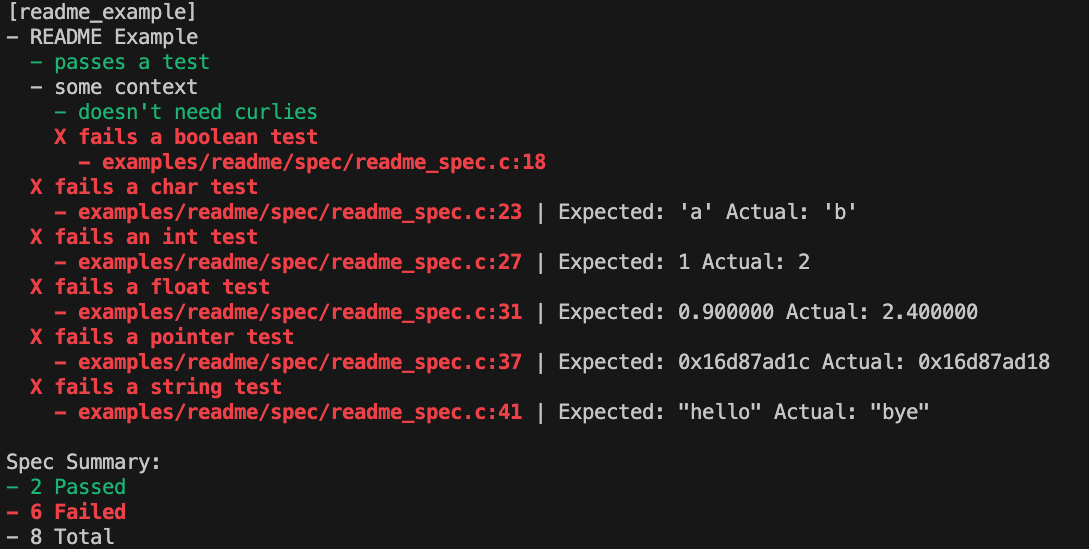
Output:
shouldshould_notshould_eq(for primitives)should_not_eq(for primitives)should_str_eqshould_str_not_eqshould_double_eq(with given err)should_double_not_eq(with given err)
You can also implement your own custom comparisons. An example of this can be found in examples/custom
The only support specc has for any kind of 'stubbing' is a #define SPECC to allow different behavior when tests are being run.
specc's entry point is in src/specc.c so all you have to do is
gcc -c src/specc.c
and then link all of your spec files.
# alternatively, `make spec-auto`
make spec
Right now, the Makefile is configured to run the simple example, but it isn't too hard to change it for your needs.