



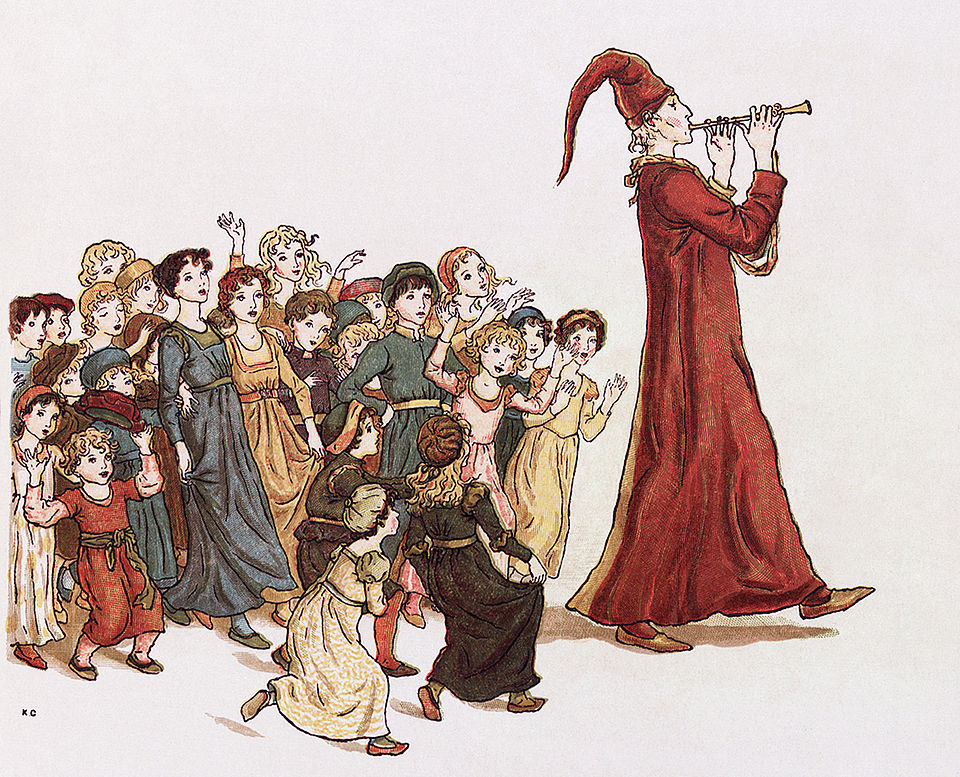
Illustration by Kate Greenaway for Robert Browning's "The Pied Piper of Hamelin"
Living beings exist in perpetual tension with their environment, continually adapting to changes in their surroundings. This project aims to model the interdependent nature of life between humans and their environment.
Full documentation, including installation instructions, usage guides, API reference, examples, and contributor guidelines, is available at: PiperABM Documentation
Install the package using pip:
pip install piperabmFor advanced installation options, including animation support, see the Installation guide.
Once a Model instance is created, it automatically includes interconnected infrastructure and society components. The simulation is designed to explore how changes in one domain, such as agent behavior or infrastructure layout, affect the other over time. This interdependence forms the core of agent-based modeling within PiperABM.
import piperabm as pa

model = pa.Model()
model.infrastructure.add_street(pos_1=[0, 0], pos_2=[-60, 40], name='road')
model.infrastructure.add_home(pos=[5, 0], id=1, name='home 1')
model.infrastructure.add_home(pos=[-60, 40], id=1, name='home 2')
model.infrastructure.bake()
model.society.generate(num=2, gini_index=0.4, average_balance=1000)
model.run(n=100, step_size=60)
For a guided walkthrough, see the step-by-step usage guide, and for additional examples, refer to the examples folder in the repository.
It has been tested and verified to work with Python versions 3.10 to 3.13. While it is expected to work with older versions of Python (given compatible dependency versions), these environments have not been tested and are not officially supported.
Contributions are welcome, including bug fixes, documentation improvements, and extensions to existing model components.
Please see the full contributor guide in the documentation: Contributing Guide
This guide explains:
- Where to make changes in the codebase
- How tests are organized and run
- How to build the documentation locally
Distributed under the MIT License. See LICENSE.txt for more information.