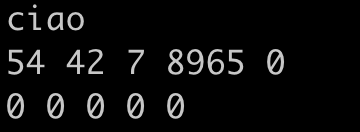
A simple and complete C garbage collector, with a group-based allocation system (but also not!).
Call ez_alloc()/ez_calloc() instead of malloc()/calloc() to allocate memory. Then, forget about your pointers and just call ez_cleanup() at the end of your program to free everything. No leaks, no stress. Have a nice day!
- 42 École Norm-compliant
- Simple API: Drop-in replacement for malloc/calloc
- Automatic cleanup: One function call frees all tracked memory
- Group support: Organize allocations into named groups for selective cleanup
- Error handling: Proper error reporting with set_error and errno
#include "ezalloc.h"

int main(void)
{
    // Allocate memory - it's automatically tracked
    int *numbers = ez_alloc(sizeof(int) * 10);
    char *text = ez_calloc(sizeof(char), 100);  // Zeroed memory

    // Use your memory as normal
    numbers[0] = 42;
    strcpy(text, "Hello, ezalloc!");

    // Add external pointers to tracking
    void *external = malloc(1024);
    ez_add(external);

    // Free specific pointer if needed
    ez_release(numbers);

    // At the end, free everything at once
    ez_cleanup();

    return 0;
}Organize allocations into named groups for more control:
#include "ezgalloc.h"

int main(void)
{
    // Create groups
    ezg_group_create("config");
    ezg_group_create("temp");

    // Allocate in specific groups
    char *config = ezg_alloc("config", 1024);
    int *temp_data = ezg_alloc("temp", sizeof(int) * 100);

    // Release all memory in a specific group
    ezg_group_release("temp");

    // Or delete the group entirely
    ezg_group_delete("config");

    // Cleanup all groups
    ezg_cleanup();

    return 0;
}void *ez_alloc(size_t size)- Allocate and track memoryvoid *ez_calloc(size_t size, size_t count)- Allocate zeroed memoryvoid *ez_add(void *ptr)- Track existing pointervoid ez_release(void *ptr)- Free specific pointervoid ez_cleanup(void)- Free all tracked memorychar *ez_get_error(void)- Returns a string describing the last error encountered.
int ezg_group_create(char *group)- Create a named groupvoid *ezg_alloc(char *group, size_t size)- Allocate in groupvoid *ezg_calloc(char *group, size_t size, size_t count)- Allocate zeroed in groupvoid *ezg_add(char *group, void *ptr)- Add pointer to groupvoid ezg_release(char *group, void *ptr)- Free specific pointer in groupvoid ezg_group_release(char *group)- Free all memory in groupvoid ezg_group_delete(char *group)- Delete group and free its memoryvoid ezg_cleanup(void)- Free all groupschar *ezg_get_error(void)- Returns a string describing the last error encountered.
make        # Build library
make clean  # Clean build artifacts
make re     # Rebuild from scratch
This creates libezalloc.a which you can link with your project:
gcc your_program.c -L. -lezalloc -o your_programRun the included test suite:
make run-test- You must include only one of the two API headers
- The library is not thread-safe
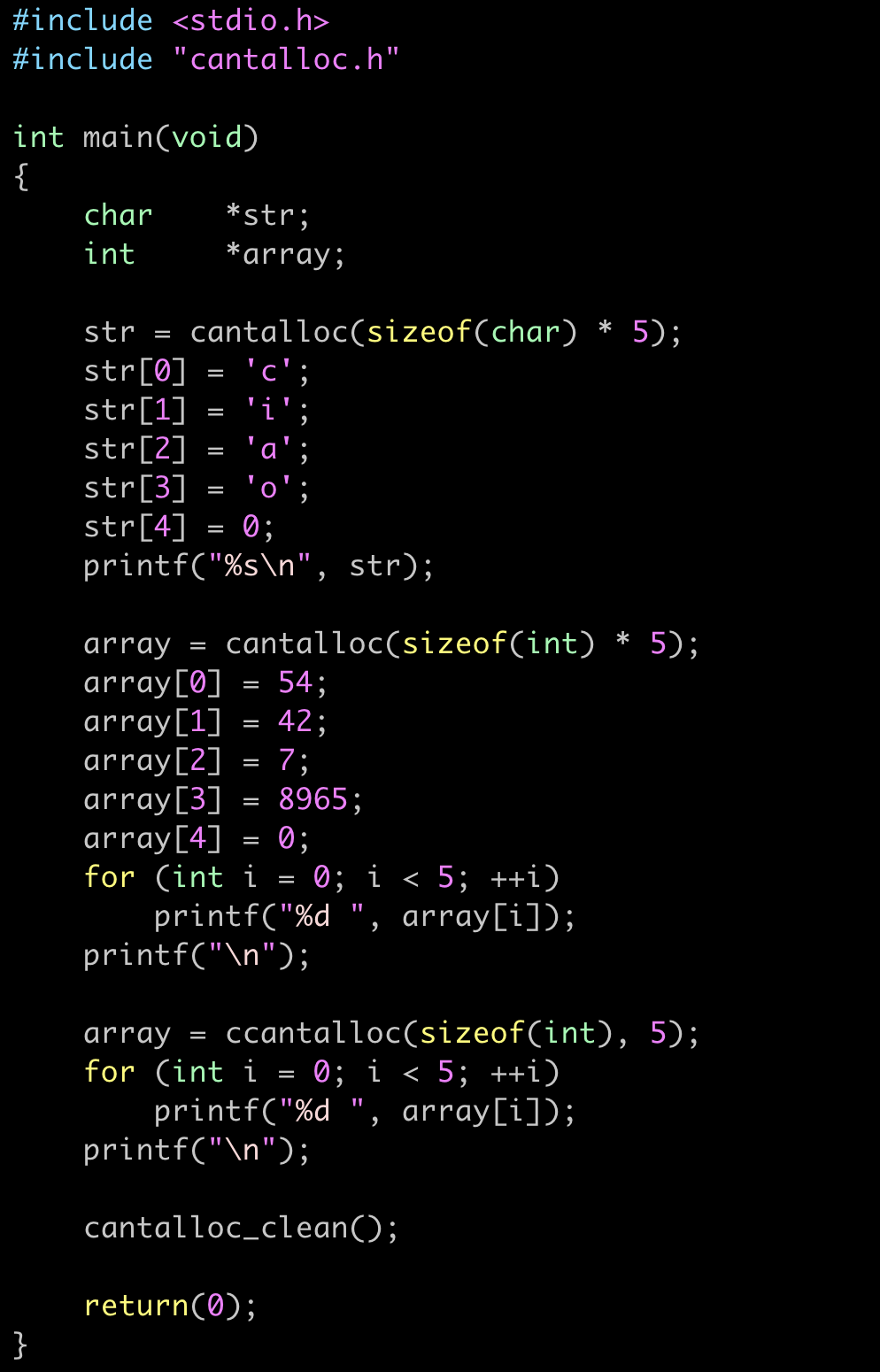
Output: