Progress
We added a lot of new UI in the past few days. There is now a health bar and a better ability interface. In addition, we have smoother attack animations and more items.

In the above gif, there is no screen shake when you attack. After adding screen shake, you can see a noticeable difference in game feel. The game feels satisfying and combat in general feels more responsive.

Some new graphical shader updates and new sprites. Most items have been implemented and our inventory and ability systems are fully functional. In addition, players and enemies have on hit animations and can die now.

There is now a basic goblin enemy AI that will follow the player around and attack if they are close enough.

Additionally, a lot of work has been done on the backend parts of the game. Once procedural generation is done and combat is finalized, we should be able to work more on content.
We now have an ability HUD, better animations, and less buggy abilities overall. Players now have to pick up abilities to use them.
The combat system is now looking very slick. We added directional hitboxes and smoother, more robust animations. In addition, the player mini-dashes while attacking as long as the left mouse button is being held down.
We've also added a new ability: Blink Dagger. The player can throw a dagger and teleport to it within 5 seconds. Additionally, we have a basic inventory HUD functional and more items are being created.

Today, we added a melee combat system and a basic dash ability for our player character.
The feather and the clock are prototype objects that give the player buffs. The feather provides extra movement speed and the clock provides cooldown reduction. We have implemented an Item class and Inventory system so adding items is very easy and intuitive as a result of our code's modularity.

More exploration:
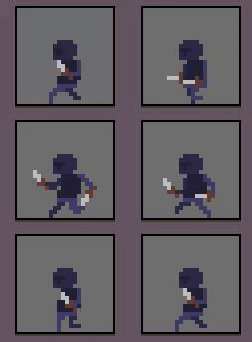
Not too much work can be shown off here, but a lot of infrastructure code has been finished in preparation for adding in enemies and other NPCs.
NEW PLAN We have decided that we wanted to make a "real", commercial game. We concluded that any multiplayer game would need a lot of concurrent players, content, and replayability to be playable. This would only be possible with good game design (This is our first game), time, and money for servers that we were not willing to spend. Because of this, we decided to use the progress we've made so far and steer course to make a singleplayer, top down roguelite. We discussed the potential inclusion of a P2P cooperative multiplayer mode as well using Mirror. Since we wanted to make this a real game, we could use Steam's own API to bypass the port forwarding that was previously required (If we can't do this, it wouldn't be too much of a loss as our game would be designed for singleplayer anyways. Some games like Risk of Rain were commercial successes even with the port forwarding requirement).
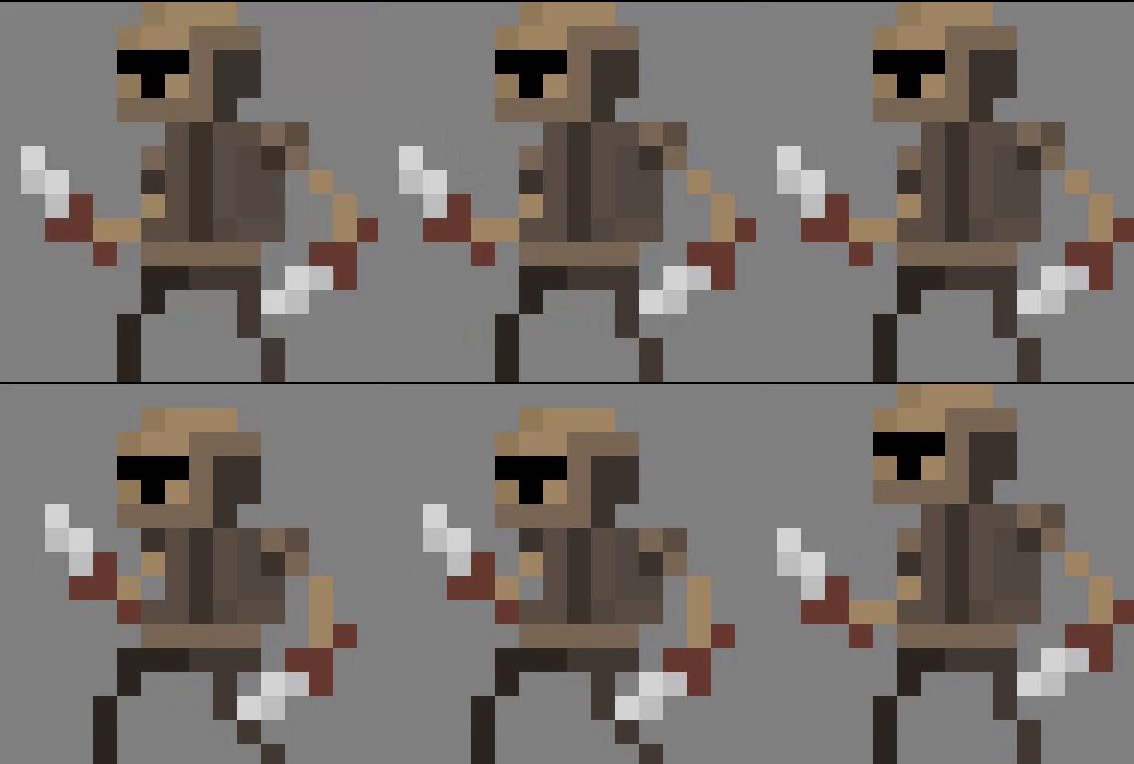
We also decided to shift the sprite sizes back to a more manageable 16x16 as the one purple hero sprite took much too long to create!
Early exploration for art style and sprites:
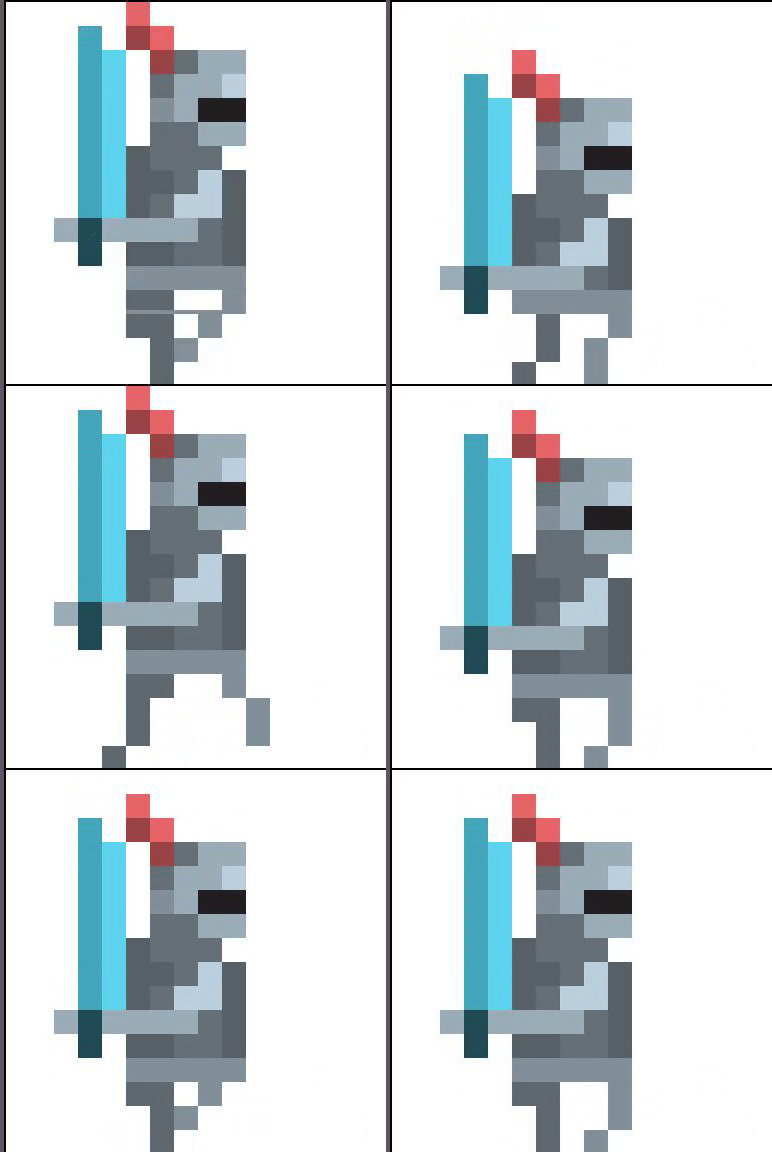
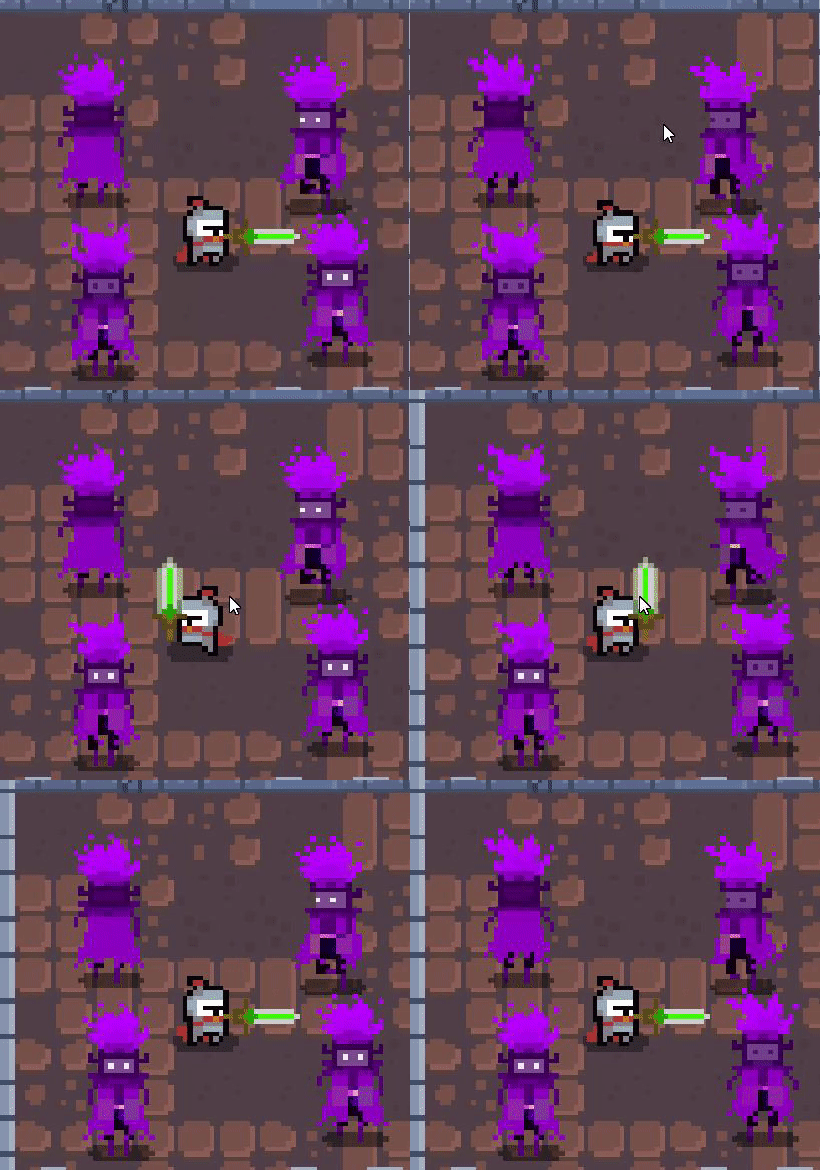
Our original knight has now been completely replaced. The shooting mechanic is back once again in the form of a magic attack.
As for the multiplayer aspect of things, a problem was realized. Mirror supports P2P multiplayer, meaning that two users can connect to each others network in order to play together, as opposed to using dedicated servers that both users would connect to. With Mirror, one player would be required to forward their port which to most people, is a complicated task and definitely not something you would want from a mainly multiplayer game (There are other methods but they require an understanding of networking that we do not have). Dedicated servers on the other hand, would cost money to upkeep and could be slower that P2P connection. Since our game's main mode was going to be multiplayer, we made the soft decision to use dedicated servers with Photon Unity Networking 2's free 20 concurrent player server. They would be limited, but would provide players with an easy way to connect to games. I was personally OK with this heavy restriction, as to me (Jerry), this project was going to be more of a learning experience than an attempt at success.
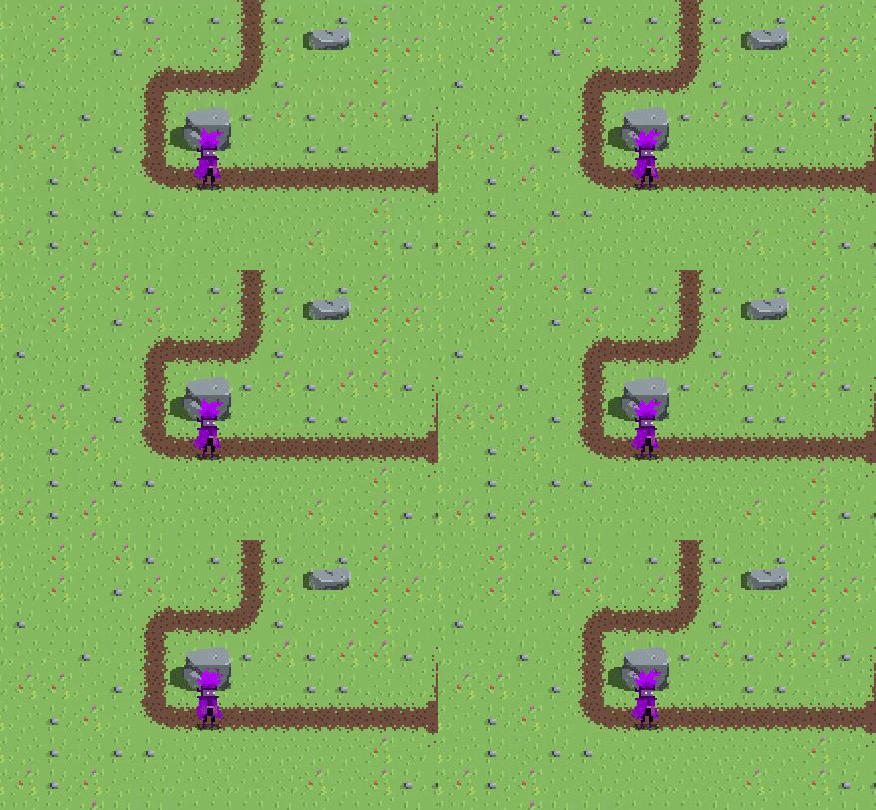
Work began for a sprite for a hero, who would fire magic projectiles. We also decided that our game would use a 32x32 sprite size for most things (Which is why the sword was scrapped).
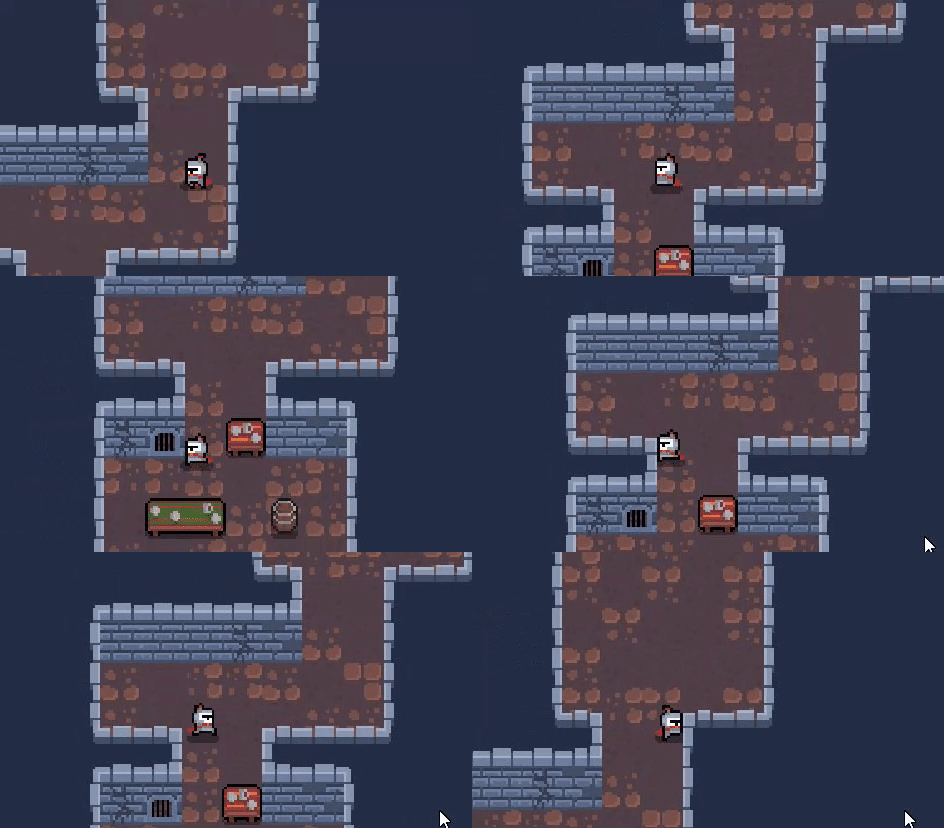
Using premade assets, it was surprisingly easy to transition to this "true top-down" to more of a 3/4 view top down. Note the animated player character, the collision with tiles, and the player moving behind and in front of objects.
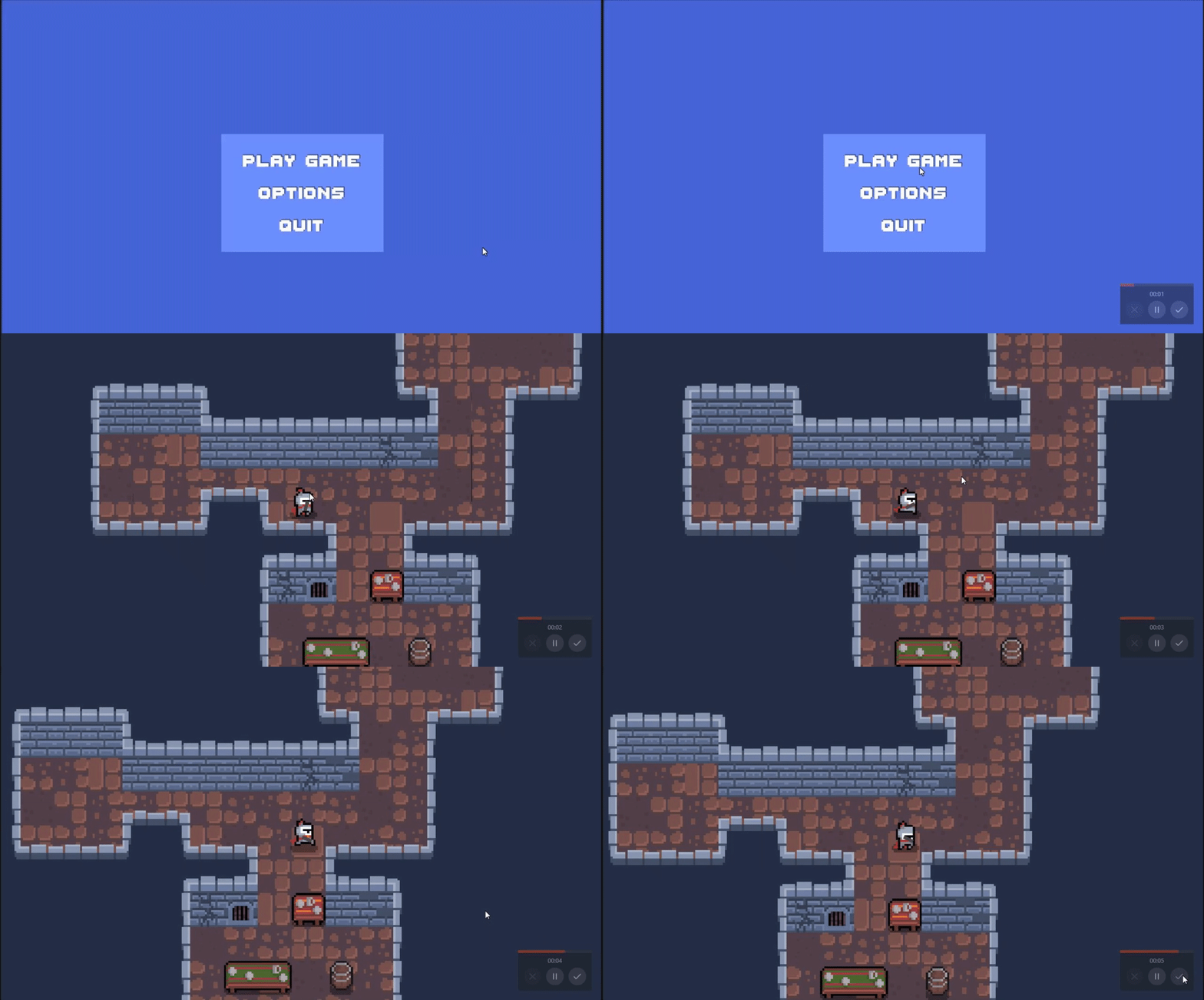
A very basic menu was created that sent the user to the level when they clicked Play Game.
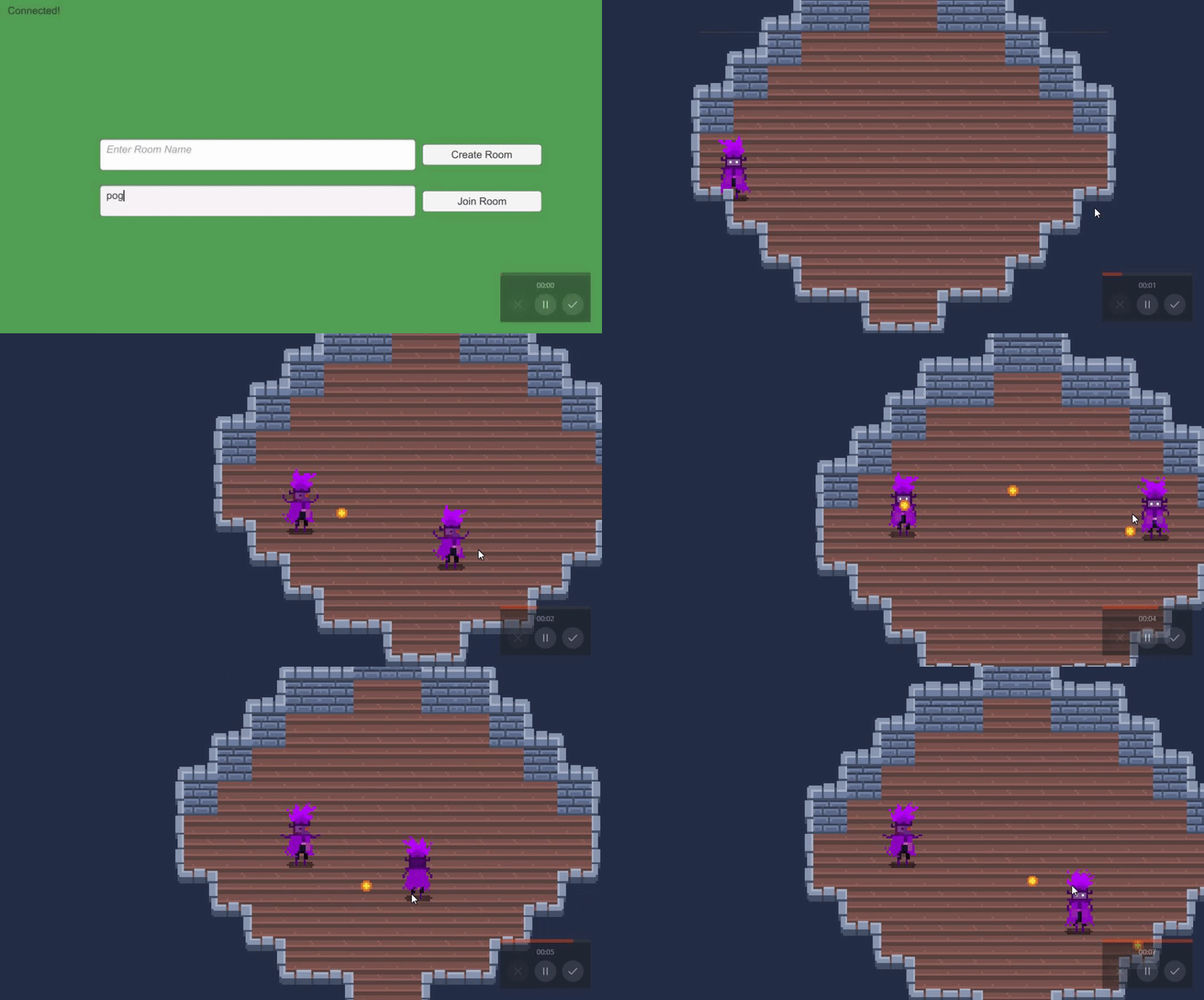
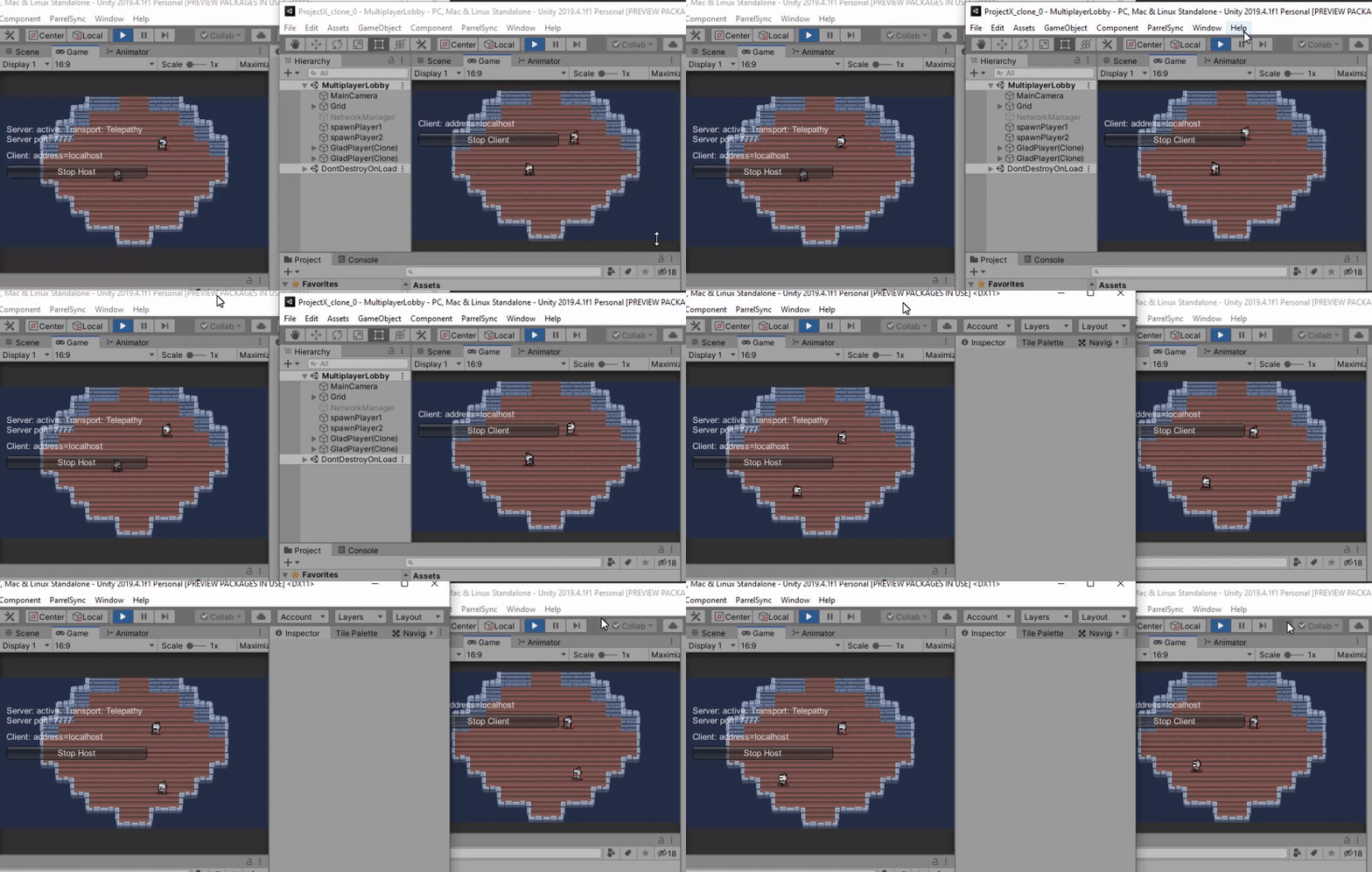
We had decided that we wanted our game to have some form of multiplayer. At this stage, ProjectX was going to be a fast-paced hero-based 1v1 PvP game (Similar to Battlerite). This basic multiplayer prototype was achieved using Mirror.
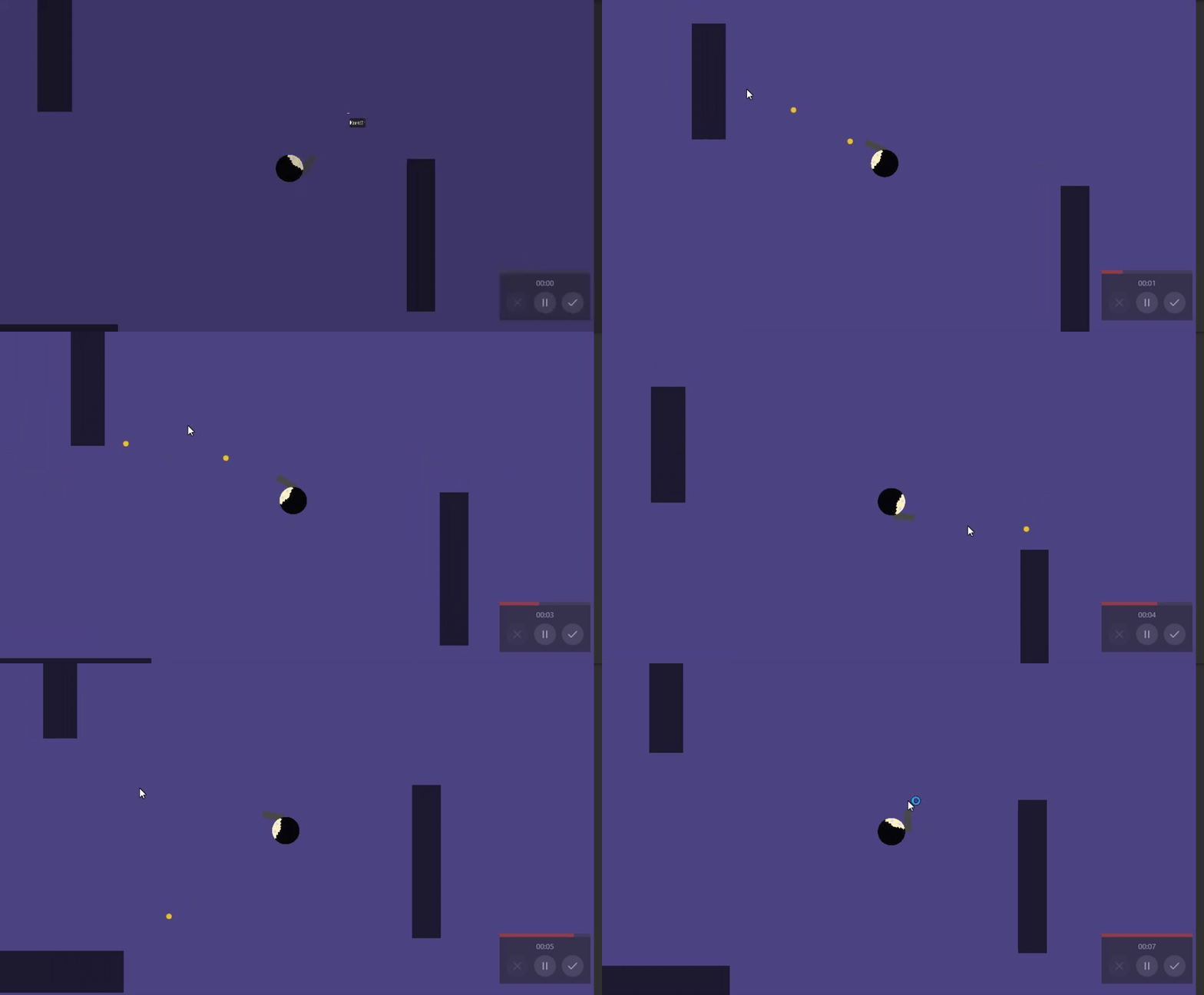
In the very early exploration of Unity, a very basic prototype was created of a top-down shooter. There were walls, a movable player, and a working gun (but nothing to shoot).