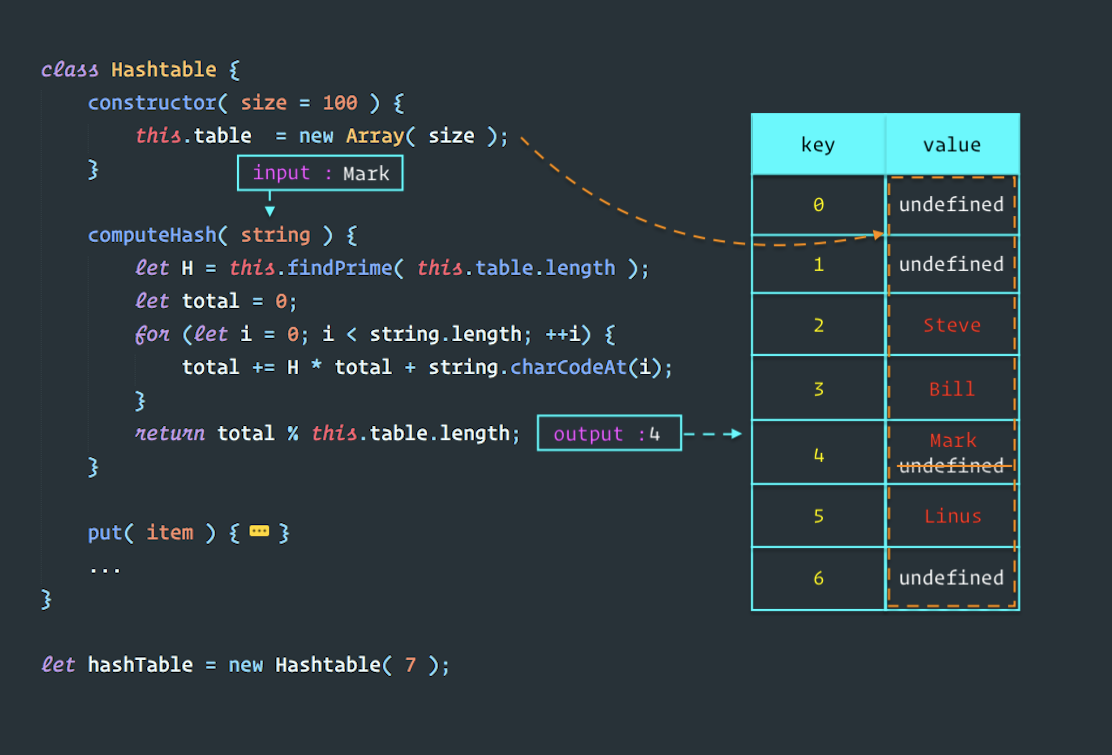
Hash - A hash is the result of some algorithm taking an incoming string and converting it into a value that could be used for either security or some other purpose. In the case of a hashtable, it is used to determine the index of the array.
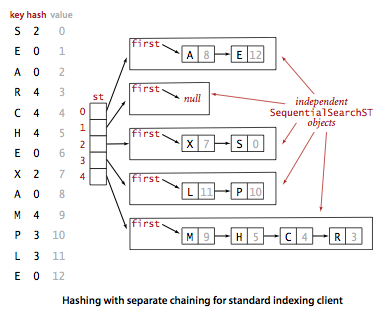
Buckets - A bucket is what is contained in each index of the array of the hashtable. Each index is a bucket. An index could potentially contain multiple key/value pairs if a collision occurs.
Collisions - A collision is what happens when more than one key gets hashed to the same location of the hashtable.
Hashtables are a data structure that utilize key value pairs. This means every Node or Bucket has both a key, and a value.
["Greenwood:98103", "Downtown:98101", "Alki Beach:98116", "Bainbridge Island:98110", ...]
Hashing Basically, a hash code turns a key into an integer. It’s very important that hash codes are deterministic: their output is determined only by their input. Hash codes should never have randomness to them. The same key should always produce the same hash code
- Add or multiply all the ASCII values together.
- Multiply it by a prime number such as 599.
- Use modulo to get the remainder of the result, when divided by the total size of the array.
- Insert into the array at that index.
Key = "Cat"
Value = "Josie"

67 + 97 + 116 = 280

280 * 599 = 69648

69648 % 1024 = 16

Key gets placed in index of 16.