-
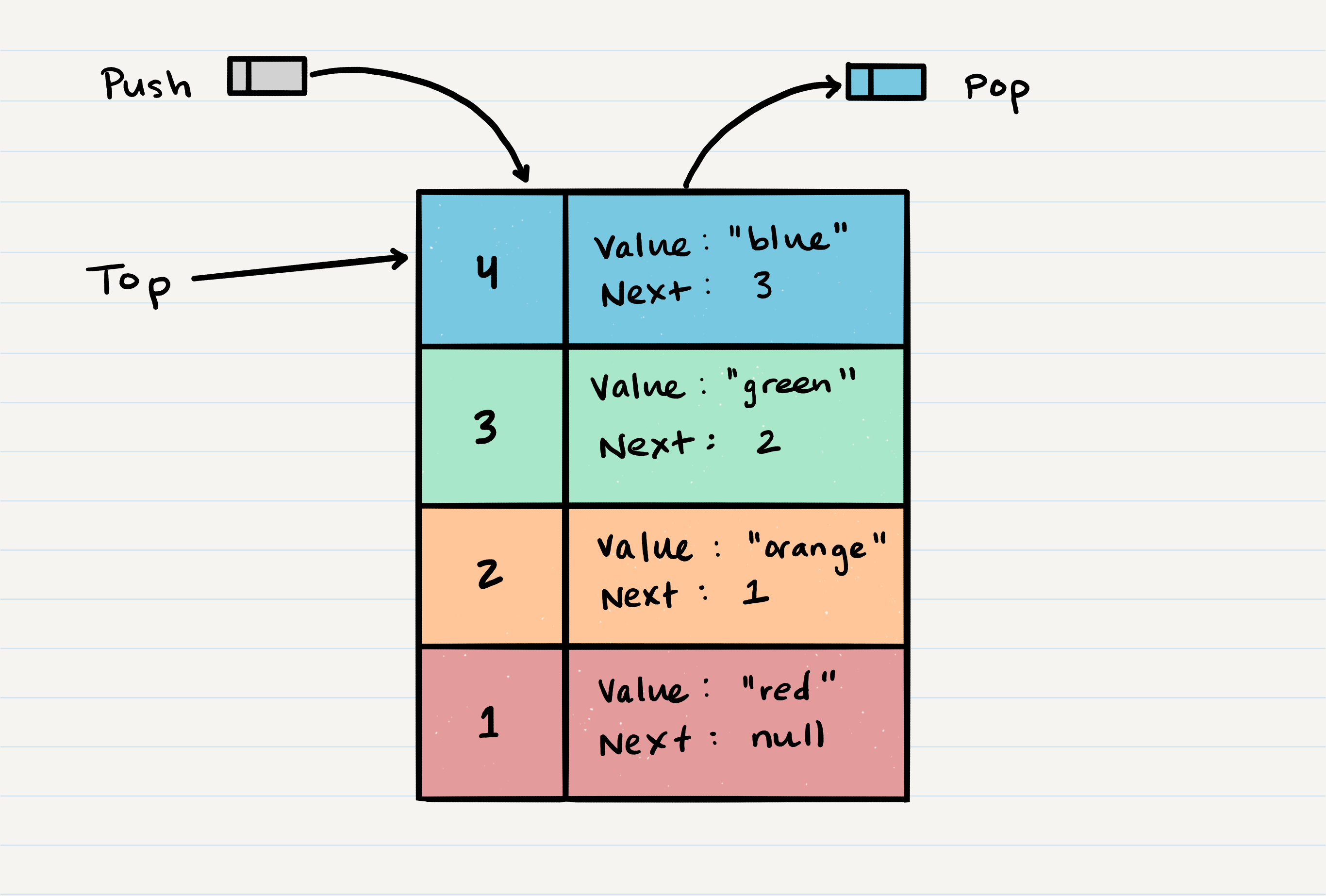
A stack is a data structure that consists of Nodes. Each Node references the next Node in the stack, but does not reference its previous.
-
- 1- Push - Nodes or items that are put into the stack are pushed
- 2- Pop - Nodes or items that are removed from the stack are popped. When you attempt to pop an empty stack an exception will be raised.
- 3- Top - This is the top of the stack.
- 4- Peek - When you peek you will view the value of the top Node in the stack. When you attempt to peek an empty stack an exception will be raised.
- 5- IsEmpty - returns true when stack is empty otherwise returns false.
-
- FILO : First In Last Out
- LIFO : Last In First Out
-
-
-
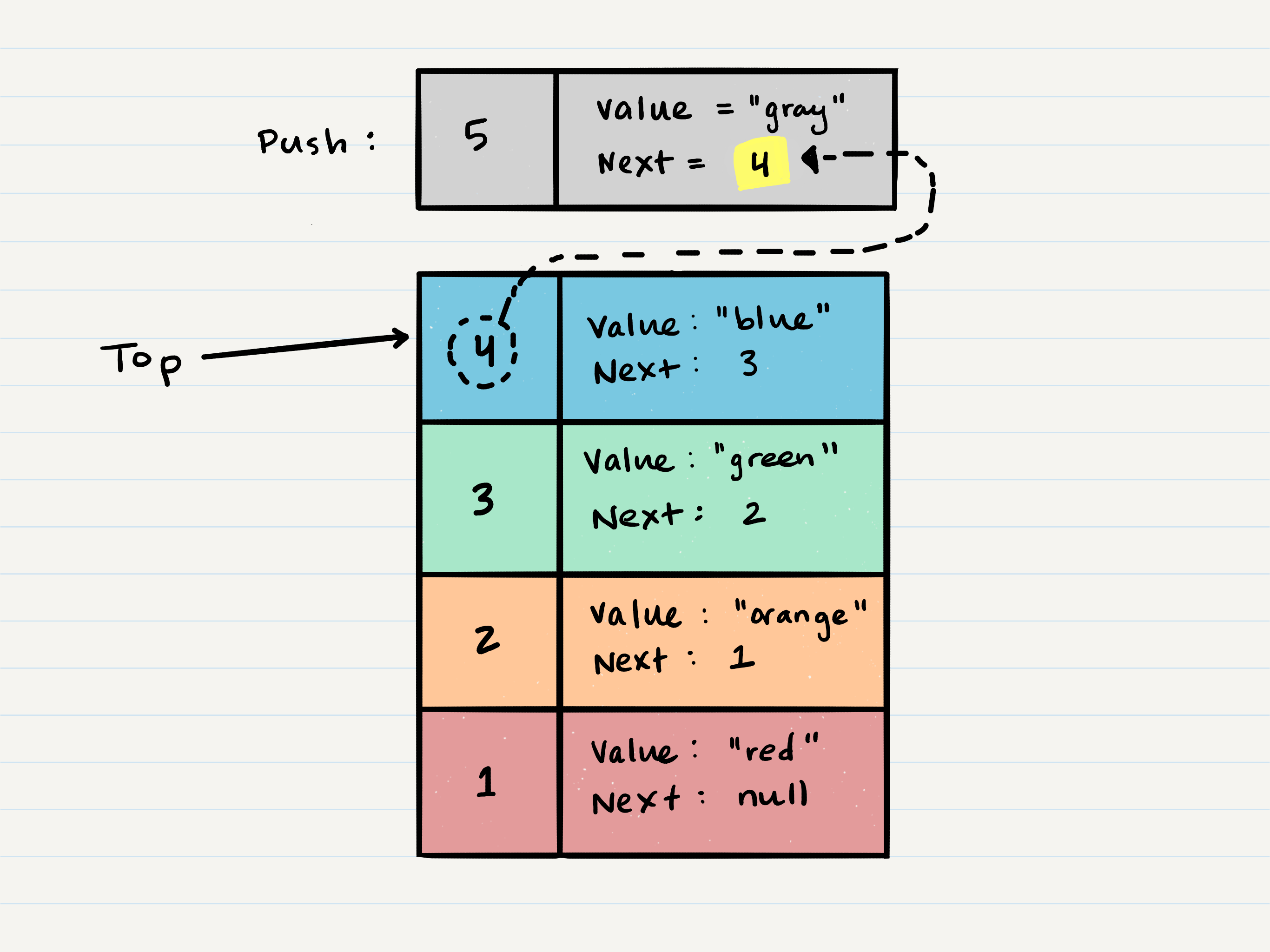
First, you should have the Node that you want to add. Here is an example of a Node that we want to add to the stack
-
Next, you need to assign the next property of new node to reference the same Node that top is referencing: old node
-
Technically at this point, your new Node is added to your stack, but there is no indication that it is the first Node in the stack.
-
-
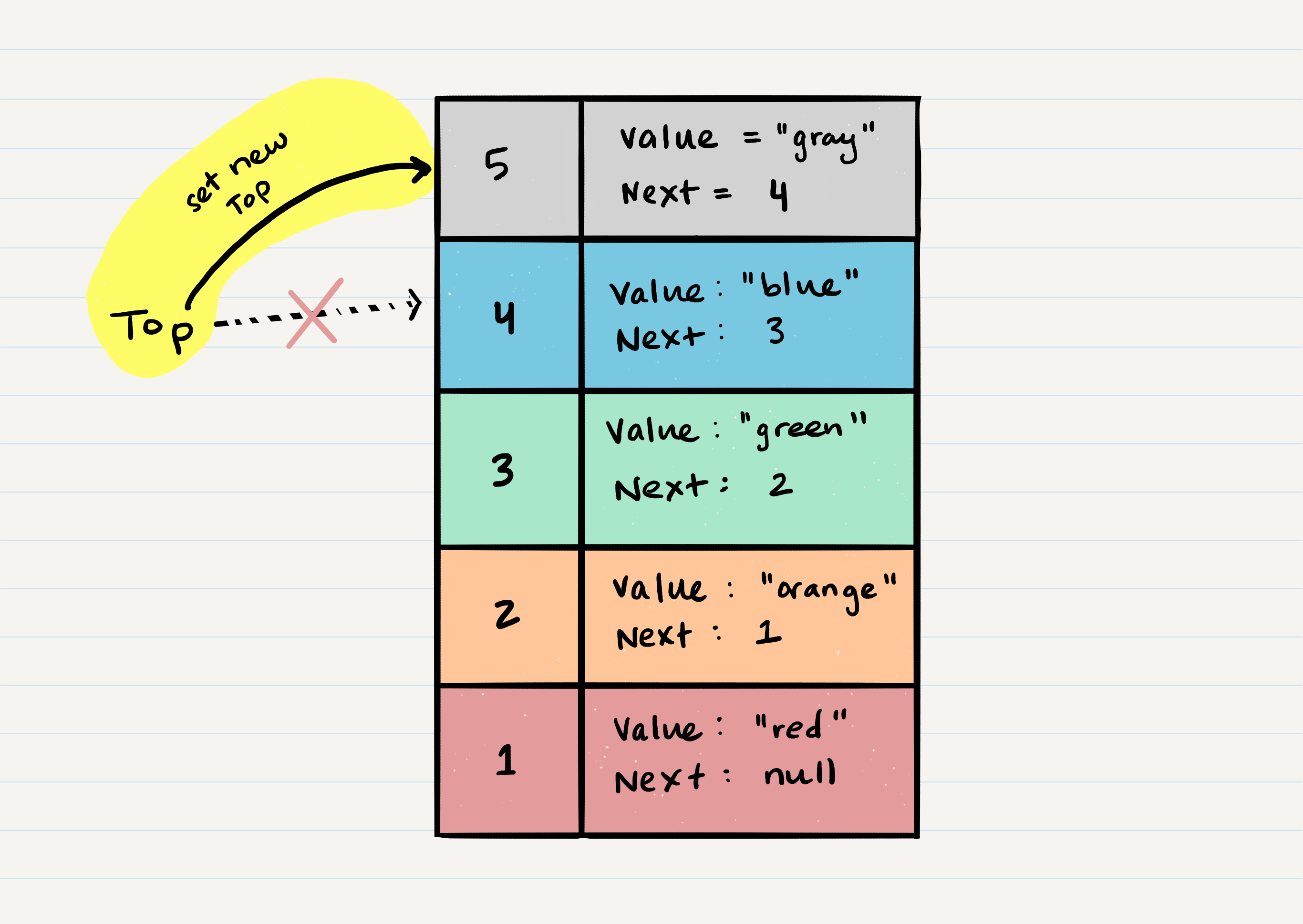
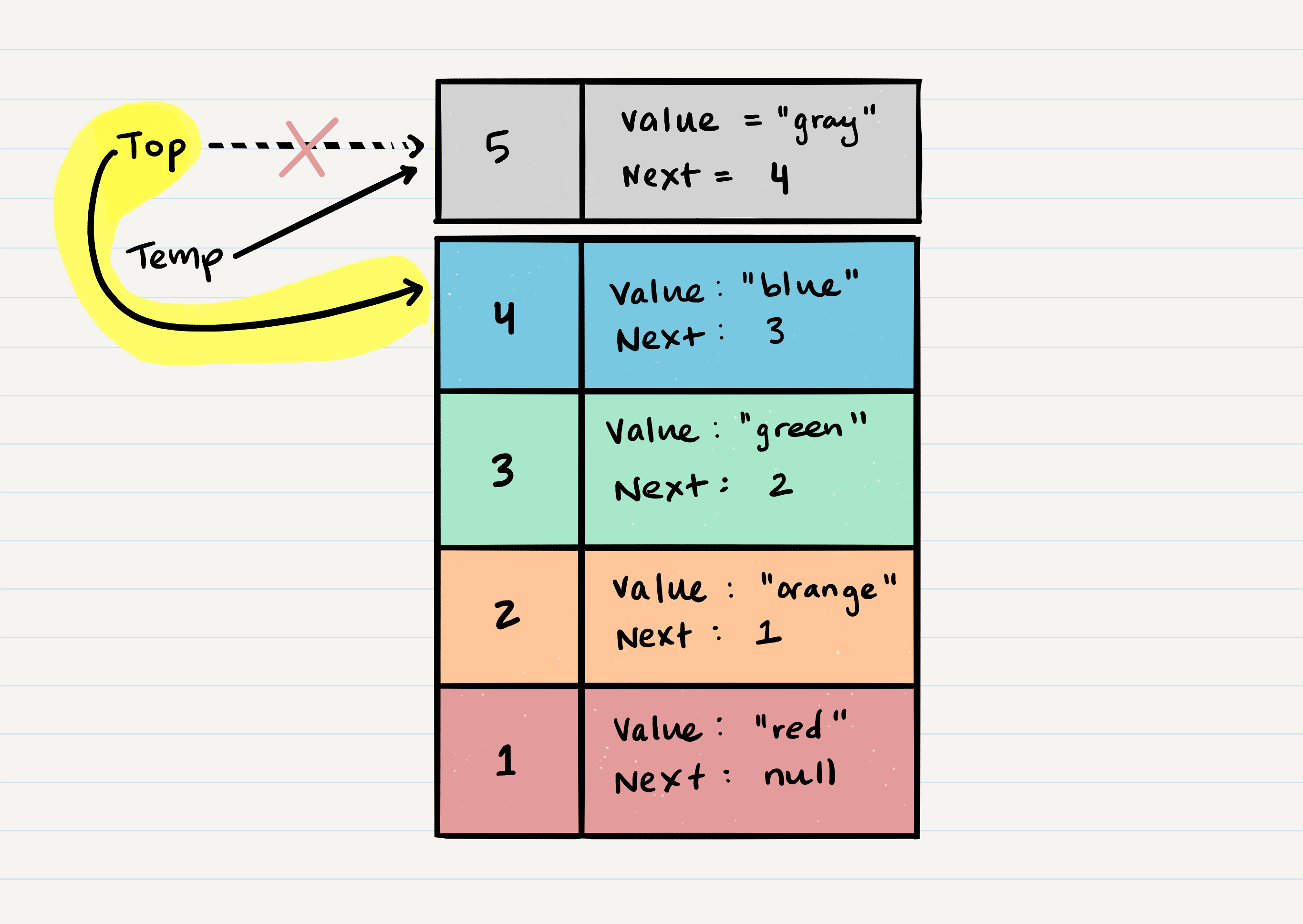
-
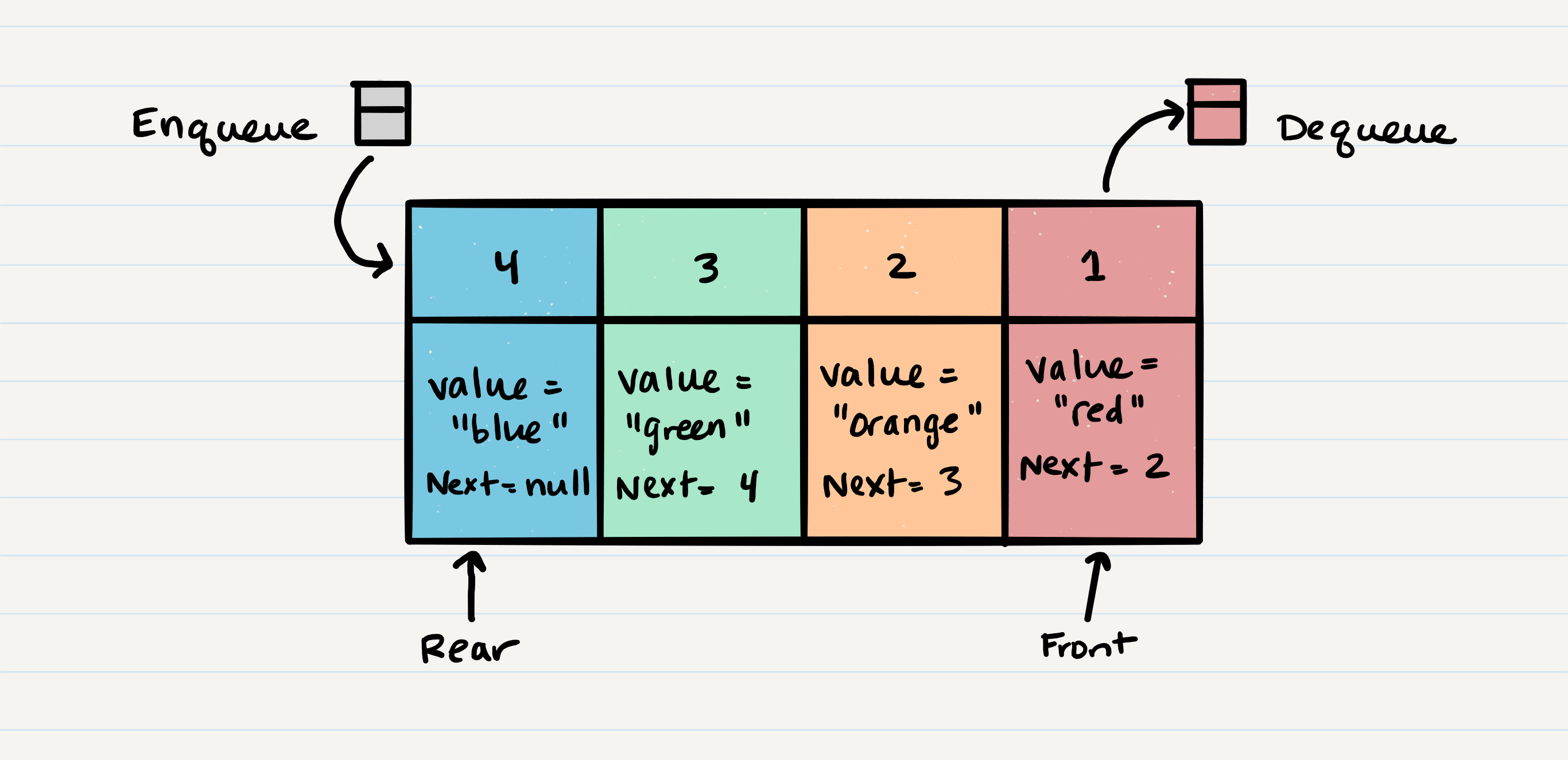
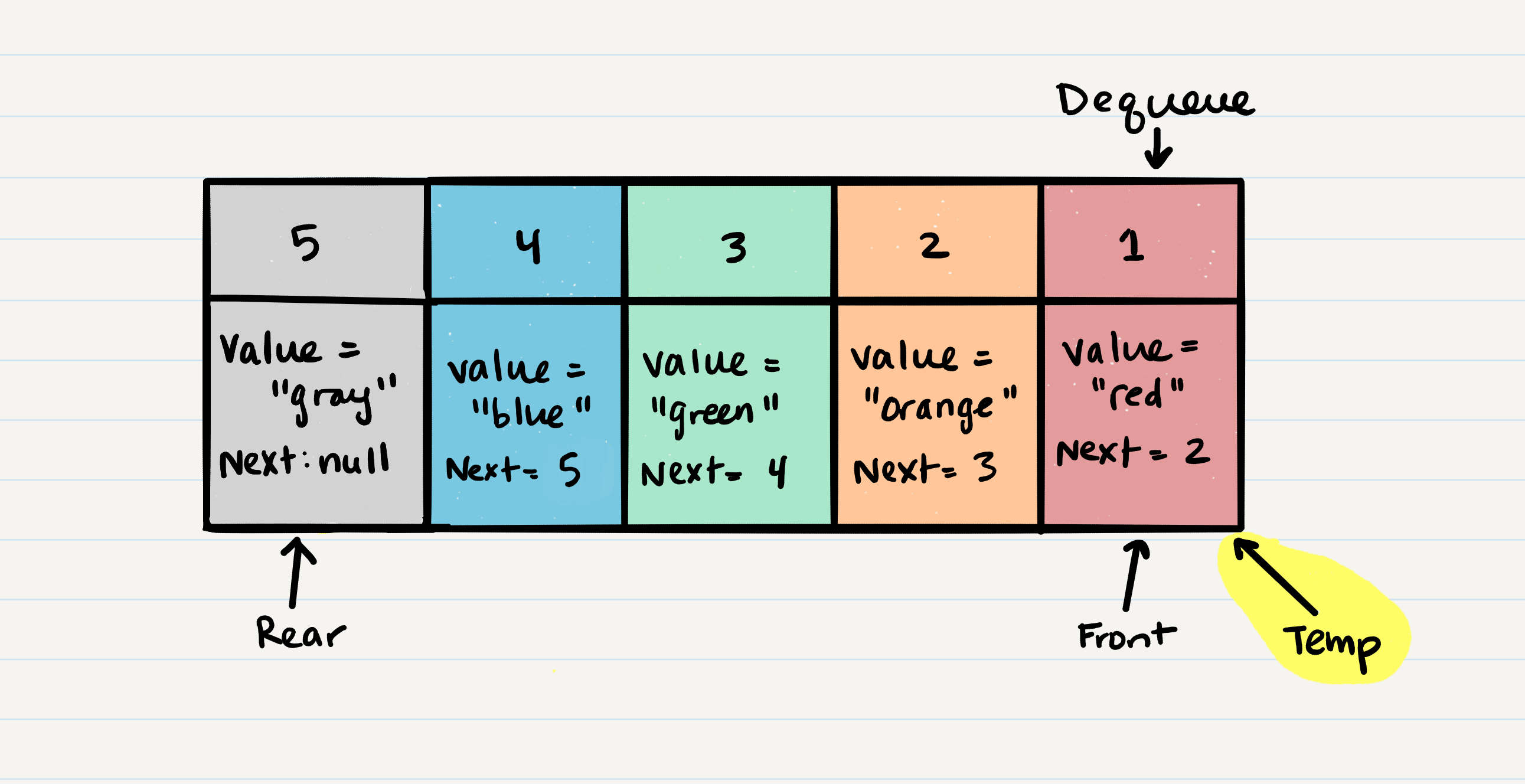
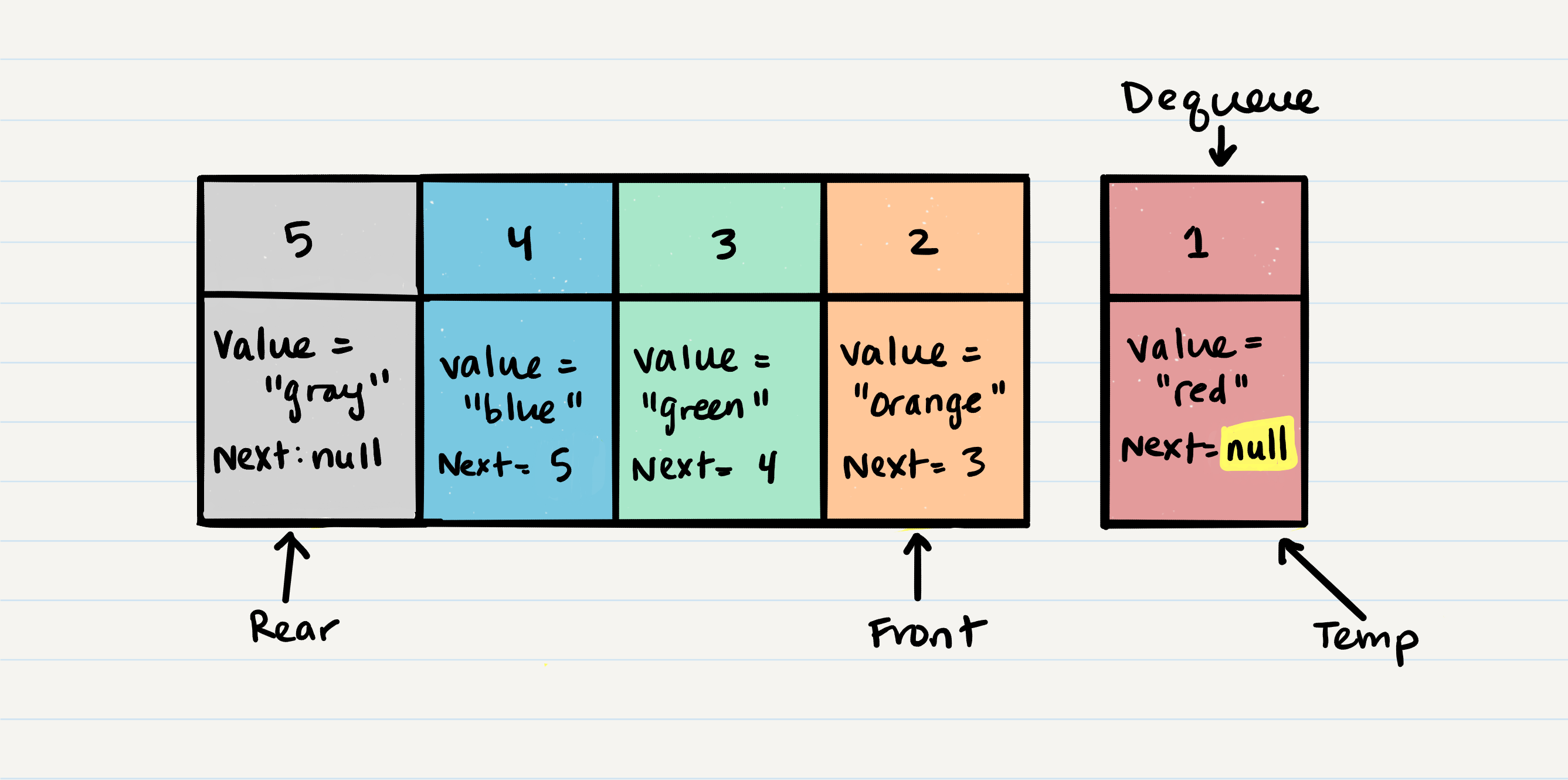
a queue is a collection of entities that are maintained in a sequence and can be modified by the addition of entities at one end of the sequence and the removal of entities from the other end of the sequence
-
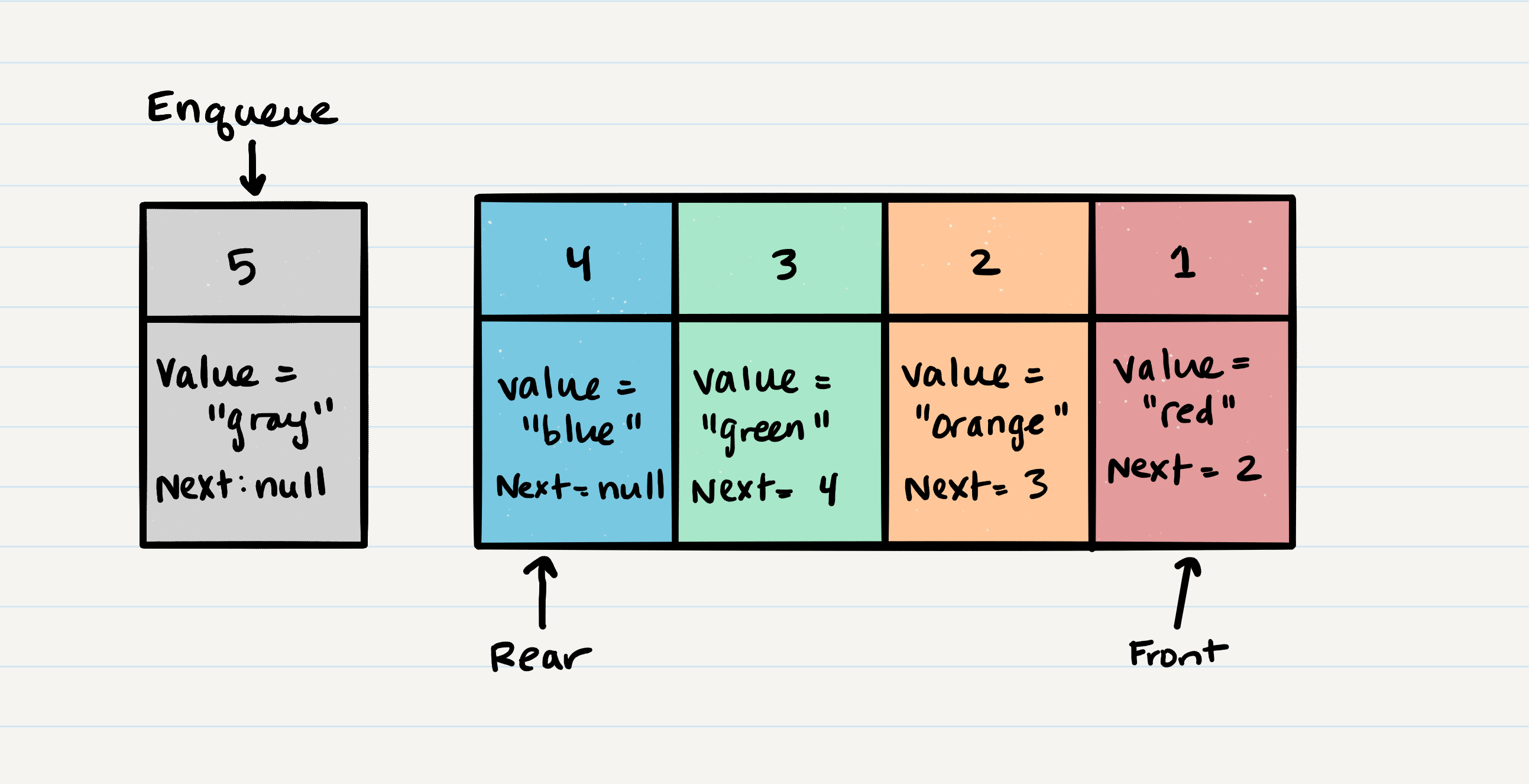
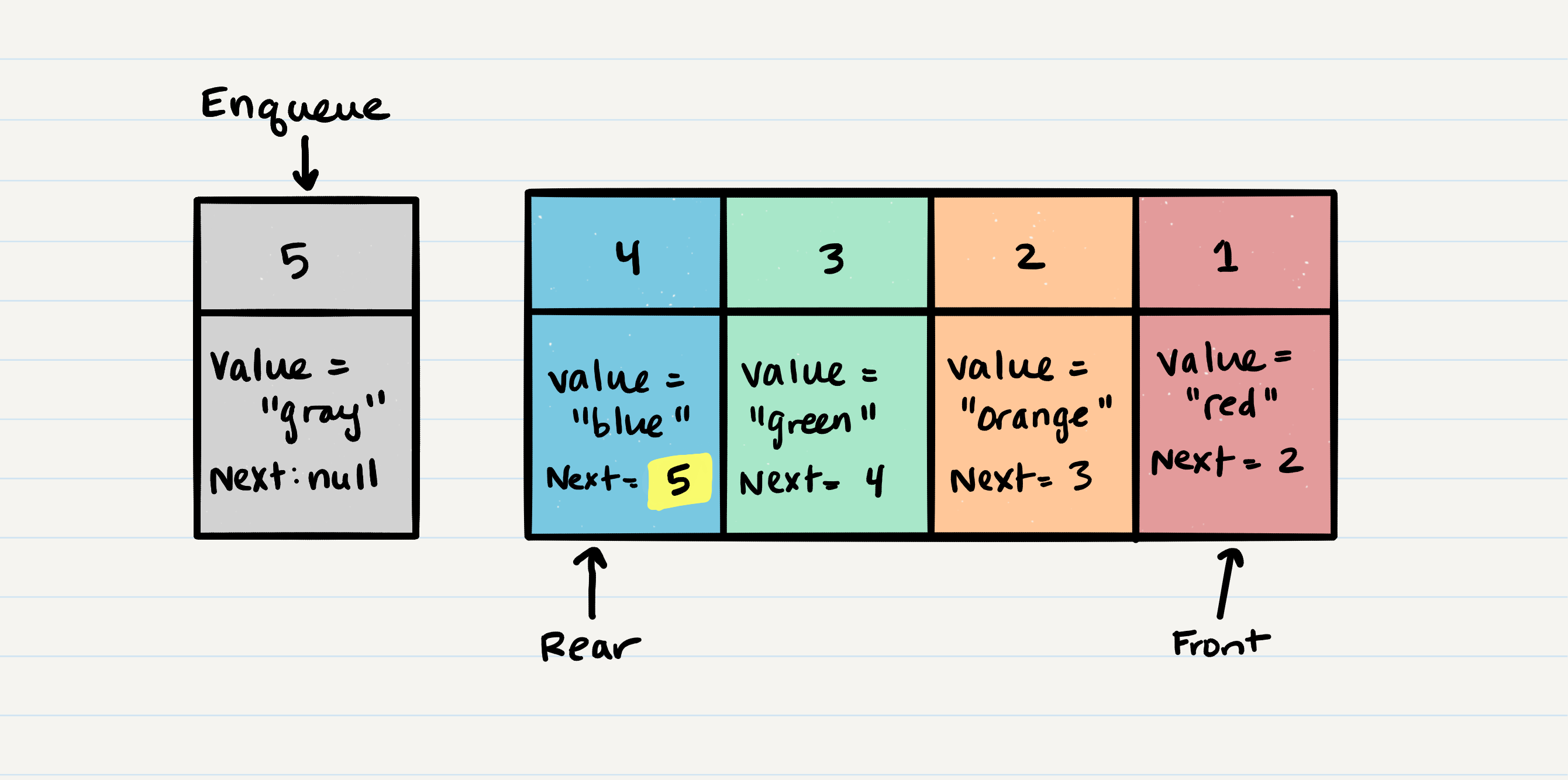
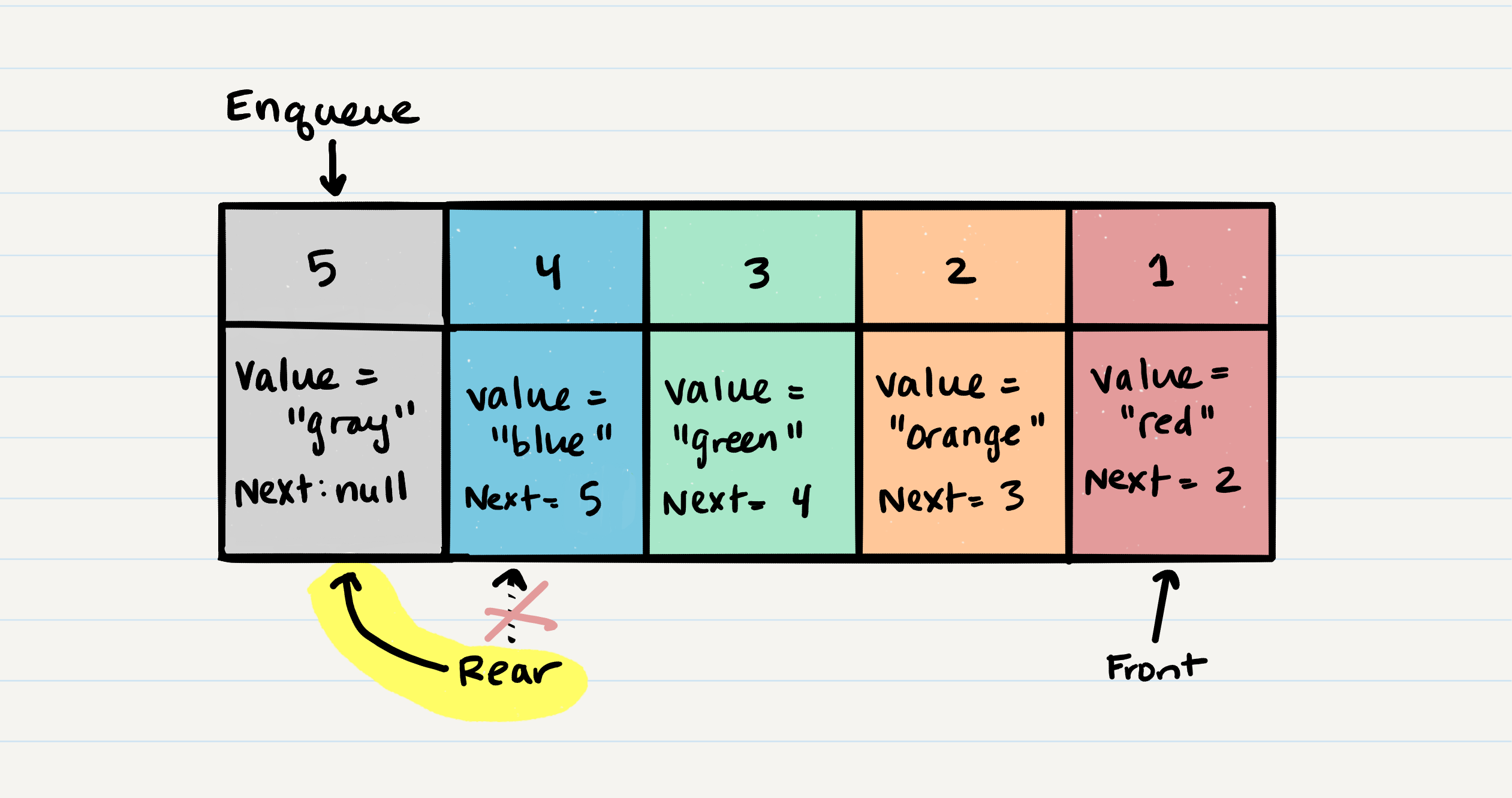
- Enqueue - Nodes or items that are added to the queue.
- Dequeue - Nodes or items that are removed from the queue. If called when the queue is empty an exception will be raised.
- Front - This is the front/first Node of the queue.
- Rear - This is the rear/last Node of the queue.
- Peek - When you peek you will view the value of the front Node in the queue. If called when the queue is empty an exception will be raised.
- IsEmpty - returns true when queue is empty otherwise returns false.
-
- FIFO : First In First Out
- LILO : Last In Last Out
-
-
-