You signed in with another tab or window. Reload to refresh your session.You signed out in another tab or window. Reload to refresh your session.You switched accounts on another tab or window. Reload to refresh your session.Dismiss alert
an algorithm takes a string and converts it into a value that could be used for security or some other purpose
in a hashtable, it is used to determine the index of the array
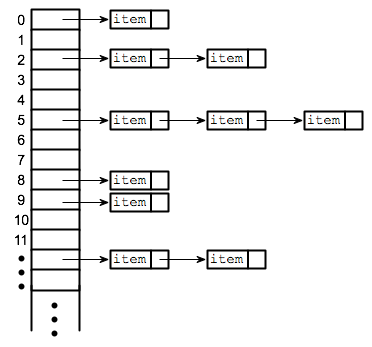
Buckets
contained in each index of the array of the hashtable
Each index is a bucket
index could potentially contain multiple key/value pairs if a collision occurs
Collisions
what happens when more than one key gets hashed to the same location of the hashtable
Hashing is implemented in two steps:
An element is converted into an integer by using a hash function. This element can be used as an index to store the original element, which falls into the hash table.
The element is stored in the hash table where it can be quickly retrieved using hashed key.
hash = hashfunc(key)
index = hash % array_size
What are Hash Tables
a data structure that utilizes key value pairs
every Node or Bucket has both a key, and a value
basic idea of a hashtable is the ability to store the key and quickly retrieve the value through a hash
hash is the ability to encode the key that will eventually map to a specific location
in the data structure, we can directly retrieve the value
O(1) time complexity for lookups
Internal Methods
Add()
send the key to the GetHash method
determine the index of where it should be placed
go to that index
Check if something exists at that index already
if it doesn’t, add it with the key/value pair.
else add the new key/value pair to the data structure within that bucket
Find()
takes in a key
gets the Hash
goes to the index location specified
Contains()
accept a key
return a boolean if that key exists inside the hashtable
GetHash()
GetHash will accept a key as a string
conduct the hash
return the index of the array where the key/value should be placed